
 Today we’re continuing our series from Sailor and the Admiral, two members of Millionaire Money Mentors who are living out their retirement dream by sailing around the world.
In the first post, When Is Enough Enough? We Sold Everything to Find Out, they shared how they decided they had accumulated enough, sold nearly everything they owned, and set off in search of a different kind of life.
If you haven’t read that post yet, I suggest starting there, as today’s article picks up where it left off.
And remember, in the very last post they will answer questions from ESI Money readers about this lifestyle. So please leave your questions in the comments below!
This installment is written by Sailor, so I’ll turn it over to him…
—————————–
By Sailor
When I was a boy, the world was half a mile away, yet I could not reach it.
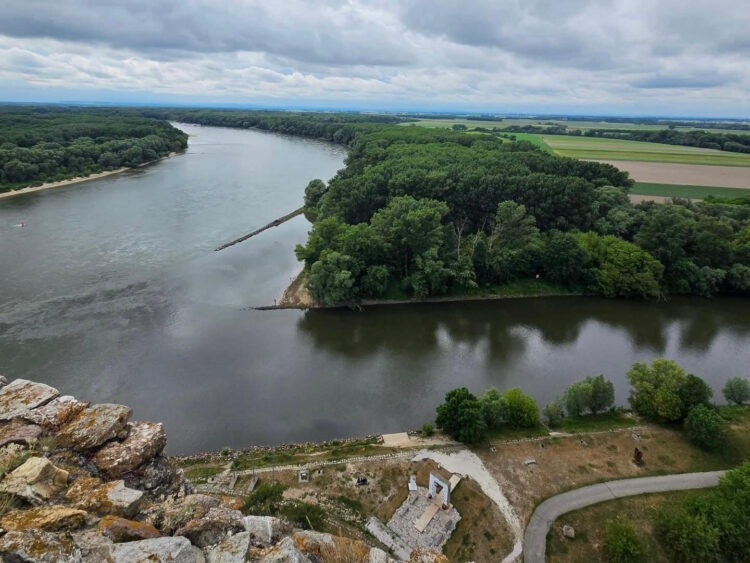
From my bedroom window I could see the Danube, and on the far side of it, beyond the Iron Curtain – the West. Austria was close enough to see it every day. It was also as far away as the moon. The electric border fences, the trip wires, the military guards in elevated outposts with rifles ready. All there to make sure no one crossed the border. They were not protecting us from anything out there, they were keeping us in.
As a kid growing up in the communist Eastern Bloc, I understood all of this the way a child understands weather. It simply was. The countryside across the river was the backdrop to every day, and it was unreachable. That was the shape of the world. Better not to inquire any further, or someone from the government may knock on the door and ask uncomfortable questions.
So I did the only thing I could do with the world that was physically around me. I tried to understand how it worked. I wanted to know how things were built, how they moved, why one thing made another thing happen. The boy who could not cross a border half a mile away could at least learn the inner workings of the world on his own side of it.
When I was ten, my dad introduced me to one of his colleagues who ran a volunteer photography club. I was fascinated by the relationship between apertures, f-stops, focal lengths and film speeds. Framing, positioning, perspective, and depth of field. I learned to develop the black & white film, to control each step in the darkroom that turned a sheet of special paper into an image. The first time I watched a photograph surface in the developing tray – a moment I had seen through a lens, now coming back to me out of the blank paper – I was hooked. It was the first time I could actively shape the world around me by capturing a moment in time.
That engineering analytical mind channeled into creative pursuits, it turns out, is the thing that would eventually carry me to the sea. But first it had to solve a more immediate problem: how does a person starting with nothing, behind a fence, get anywhere at all.
___________________
People who grew up in America have a definition of scarcity that is distinctly different from mine. Scarcity in Eastern Europe was not a feeling. It was the empty grocery store shelves. The phone line that would take years to install. The 10-year waiting list for a basic, unreliable car. When a buyers’ name finally reached the top of the list, they took whatever color showed up in the government-run store.
My early upbringing in a middle-class family meant we could afford meat for two meals per week. As a pre-teen, I stood in line for hours to buy the per-person ration of 2 individual rolls of toilet paper. No idea when it would be available again. Must be present to complete the purchase. That wasn’t a pandemic, just a regular Tuesday.
By the time I was twelve, I had found my first opportunity to get ahead. I would tag along on community day trips with retirees, take candid pictures, develop samples in the darkroom, and circle back selling the mementos. I reinvested that money into film supplies for the next trip.
I had found my first entrepreneurial side hustle, seizing an opportunity while it was there to seize. That was scarcity’s first lesson, and it came with only one setting on the dial. Full on. I grew up certain that at any time, the shelves could empty. The survival rules that worked today could change tomorrow. Thus I never learned to coast. I learned to push, and I did not stop pushing, because stopping meant irreversible loss of the hard-earned position.
There were few second chances, whether it was dealing with a bureaucrat in a government office or being invited into a street hockey game. I carried that dial setting for a long time, and having more money, it turned out, does not switch it off. I could watch the numbers in the bank account increase yet the instilled fear drove me exactly as before.
Scarcity taught me one more thing, and this one I still hold onto. The shelves could be empty. The currency could turn worthless. A border could determine my whole life without asking. What none of it could reach was whatever I managed to build on the inside – what I knew how to do, what I could figure out, what I would not quit on. I knew where to focus when everything else gave way. I did not have the words for it as a boy, but no matter the adverse circumstances that showed up later in my life, I would always lean into perseverance.
___________________
When The Wall came down in 1989, the average income across the Eastern Bloc was less than $2,000 per year. Five bucks a day.
In 1993, when I left for America at seventeen, my grandmother turned to my mother, stone-cold serious, and asked: “Why would you let free manual labor just walk out the door?”
She was not being cruel. She meant it the way scarcity teaches a person to embrace a worldview of survival. Our yard was not a leisure lawn – it was a small productive plot of land, a few seasonal vegetables and fruit trees that filled the gap between what we needed to eat and what the store either charged too much for or simply did not have. Here was a grandchild’s pair of working hands able to produce food, walking out the door for good.
My parents let me go anyway. In a place where leaving was nearly impossible and asking too many questions brought trouble to the door, they chose my future over the arithmetic of household labor. No one I knew had parents who would make that trade.
As an only child, my parents could not place a second bet to hedge the first – it was me or nothing. By seventeen I had given them reasons to be proud, but pride does not stock a pantry. Where I came from, a thing only counted once it was held in hand. My parents took a chance on me in the most intangible way a scarcity-driven parent could.
So I promised my parents a dividend. I would repay all they had put into me – the airfare scraped together from years of saving, the distance with limited communication, the separation preventing them from watching their teenager turn into a young adult. I was going to America, the land of opportunity where fortunes are made!
___________________
I arrived in the USA as a foreign exchange student with much ambition to learn, and enough English to hold a conversation for about ninety seconds before running out of vocabulary. A host family took in my deer-in-the-headlights self and gave me a place to land – a roof, an initial set of bearings, a start in a country where everything was new to me and Google hadn’t been invented yet. Anything and everything was exciting and worth investigating.
Learning English required a dictionary at my side and a great deal of patience. Numbers needed no translation. Math is the same in any language, the numbers add up the same. In a country where I could not yet hold a simple conversation, that counted for a lot. What I had to learn was not the math but the system around it – credit history and how to build one, how credit cards worked, what a debit card actually was, how loans worked, the many ways interest could be calculated.
Coming from a cash-based society where cars and houses were bought with plastic bags full of banknotes, the only financial progression I experienced was one of high double-digit inflation. The monetary effects of compounding, just in the wrong direction.
Where I grew up, the government supplied the detailed structure for everyone’s life path and legislated every fine detail. In contrast, America put up a general framework, handed over far less, and asked far more in return. It expected me to provide for myself. No one was going to arrange my path or stand up a life for me to step into. I would have to build it myself, out of whatever I had on the inside. For a lot of new arrivals, that was the hard part. No promises, no reassurance, no guarantees. For me, it was an arrangement that finally made sense. Self-reliance was just betting on myself with the brakes off – a move I already knew best. What scarcity had drilled into me by force, America quietly rewarded. For the first time, I felt at home.
___________________
Those first seven years in the USA – each felt like a decade – matured me quickly. They were formative as to what I wanted, how I wanted to get there, and what I was willing to put forth, which was everything, anything. Going back to Eastern Europe was technically an option, but not one I was willing to entertain in any way, shape, or form. I walked through that door, and hermetically sealed it closed.
Much of my energy went toward the goals themselves. A lot more went toward figuring out a system – cultural, financial, all of it – that was unknown to me. There were no YouTube videos that would let me hack the shortcuts.
Paying foreign-student fees at the university was the first struggle. There’s in-state tuition, there’s the much more expensive out-of-state tuition, and there’s the super expensive foreign-student tuition. In addition, there were all of the mandatory legal and immigration fees. The educational system in the early 90s was not designed for foreign students, and nearly all financial aid was limited to US citizens. Finding the needle-in-the-haystack scholarship for which I might be eligible required days spent in the library and mailing out hand-written applications.
To pay the bills, I put my father’s guidance to work. Growing up, when something broke, there was no one to call – in part because of the expense, and in part because finding a person with the skills, integrity, and the right tools was nearly impossible. My father was a handyman around our apartment and frequently fixed a thing or two for the neighbors as well. He’d take me along, and talk me through each problem he encountered. Plumbing, wiring, engines, whatever the problem was. Scarcity forced it and he patiently guided the lessons.
In college, I printed flyers that advertised “Mr. Fix It” with my phone number and hung them around town. It was an attempt at building something by matching up my skills, my hard work, and the demand. It propelled me the same way a closed door compelled me to find a way to the other side.
I never looked at a problem and lamented that it was hard. The challenge was always to find a possible solution, no matter how tiny or inconvenient. I spent no time considering how treacherous the path might be. If there is a path toward solving the problem at hand – and nearly always there is – it is just a matter of applying my perseverance to push through even the tiniest opening.
Then I found an easter egg. Legal, not so well documented, hard to accomplish. If I could get $1,000 in academic scholarships, nearly all of which were only for US citizens, the school would charge me in-state tuition. I could save ninety percent of my school costs. Hack identified. There WAS a path. Game on.
Concurrently, I hustled at a casual restaurant serving tables, sometimes ten days of double shifts in a row. I had to buy new shoes every couple of months because my soles would wear through to my socks. I worked when there was work, picked up extra shifts and tables whenever the opportunity presented, and earned what I could when business surged with the season. When I had a bit of surplus, I saved ferociously for tuition, because staying legally in the US was predicated on being enrolled full-time, and being enrolled required paying for the class credits.
Some of my classmates defined paying their own way through college as being responsible for their spending money, while mom and dad paid for tuition, books, the apartment, and more. I had to be self-reliant.
I had staked my own future on America, and I was willing to do anything and everything to follow the immigration process legally. That one word matters to me – legally. The pathways exist, and they are hard. With perseverance I navigated the complex system. So did hundreds of thousands of others who cut up their safety nets upon arrival in America.
Ultimately, I finished my undergraduate degree with a full academic scholarship, and secured scholarships for two master’s degrees at two different graduate schools. By twenty-four I had graduated from a top school with a globally recognized international business degree and an MBA. Debt free. That bright-eyed, bushy-tailed boy who seven years earlier didn’t speak English grew into a man with his first taste of success.
The truth was constant hard work with many setbacks. As long as I stood up after each failure, I was making progress. It took a lot of energy and focus. My parents, and former classmates back home, questioned why I would work so hard in America for such minimal results. If I worked half as hard back home, I’d live like a king – relative to everyone else making $5/day. That’s not the kind of goal I was setting for myself, and there was a very definite ceiling to success there.
The equivalent level of success back home would not even clear the poverty line in the US. The Eastern European structure has an intentional upper cap on ROI, and I deliberately left those limits behind. I wanted to work hard, and get great results. Then, work harder and pursue unlimited success, capitalizing on the all-you-can-eat buffet of available opportunities. The direction was clear. Upwards, and onwards.

___________________
My professional career kicked off at a large financial services firm in New York City. A globally recognized, respected name on my business card. An important title, a lucrative management path. I had my own apartment in Manhattan. I’d made it. I’d arrived.
In a conglomerate with hundreds of thousands of employees, it was my first experience of corporate bureaucracy, and of how slowly large companies move. A jolt to a scrappy mind wired to find paths forward, not document and obstruct them. The anti-entrepreneurial climate was a reminder of the layers of rules under communism. Everything had a detailed, documented process, written for the lowest common denominator. Improvements and shortcuts that were self-evident had their own bureaucratic process and approval committees. There was no nimble approach. I couldn’t just try something and see what happens. Just like the culture I’d left in Europe, the risk aversion and the safe middle path were sucking my soul.
I started to consider happiness as a factor. Not just the job title, or the level of income and the prestige of the position. What do I want, versus what does everyone else want for me and from me? My parents implored me not to quit the big successful job, not to give up the corner office on Park Avenue and 53rd. Do I trade societal prestige for being happy? Do I spend the next four decades toiling in a job that I dread? I could save, climb my way to success, and sacrifice my soul and my inner desires to do it. I didn’t know what I wanted, but I slowly honed onto what I did not want. I had stepped into a mistake that took 3 years to untangle.
It took seeing the planes overhead on September 11 and the first-hand aftermath of the towers coming down to have my first clue that “enough” might not be just about financials, success, money, or numbers. It was the first of many intangible yet impactful hints.
The career change precipitated slowly, then shifted suddenly. There were numerous colleagues further along their career path who reflected on their early years. While they wanted to make the change they were already trapped in their lifestyle hamster wheel. Most peers were shocked I was giving up an instantly-recognizable name across major international financial centers, for a tiny family-run company in a worn-down Dallas suburb.
I didn’t apply for a job based on title or a description. I didn’t even apply for a specific position. I walked in and simply asked: Where can I contribute the most? What can I deliver to make the company more money? It sounds like I was focused on the financial equation, but really it was understanding the full circle of what makes the economy work at small scale. Recalling how I sold black and white photos to retirees, I inherently understood the system of monetary circulation, incentives, and creating value. I wasn’t just a W-2 employee. I was a business vendor of one, an invaluable resource to the company hiring me.
It was a new definition of freedom. My actions had direct outcomes. I could pursue my own ideas and see the impact of my work first-hand. I traded externally-defined prestige for inner happiness. The work didn’t feel like a job. I wanted to stay after hours and push for more forward momentum, more results, new approaches. Learn, learn, learn. Try. Fail. Try. Fail. Try again. As long as I stood up after each failure, I was making progress.
___________________
My frugality and the lower cost of living in Texas resulted in hard-earned though modest savings ready to invest. I became a home-owner, but didn’t see the point of filling up square footage with furniture. Thus, the first-time home buying process was to purchase a single family rental in a Dallas suburb. I was now the landlord, the maintenance worker, the cleaning crew, and the accountant. A side-hustle that consumed many of my nights and weekends. Another feedback loop between effort and outcome. Because I negotiated relentlessly and bought the house at a substantial discount, I had the breathing room to make mistakes and adjust my approach. I learned to make money on the buy, never counting on future rent increases or appreciation. The lessons were filed for the bigger landlord pursuits I didn’t yet know were coming.
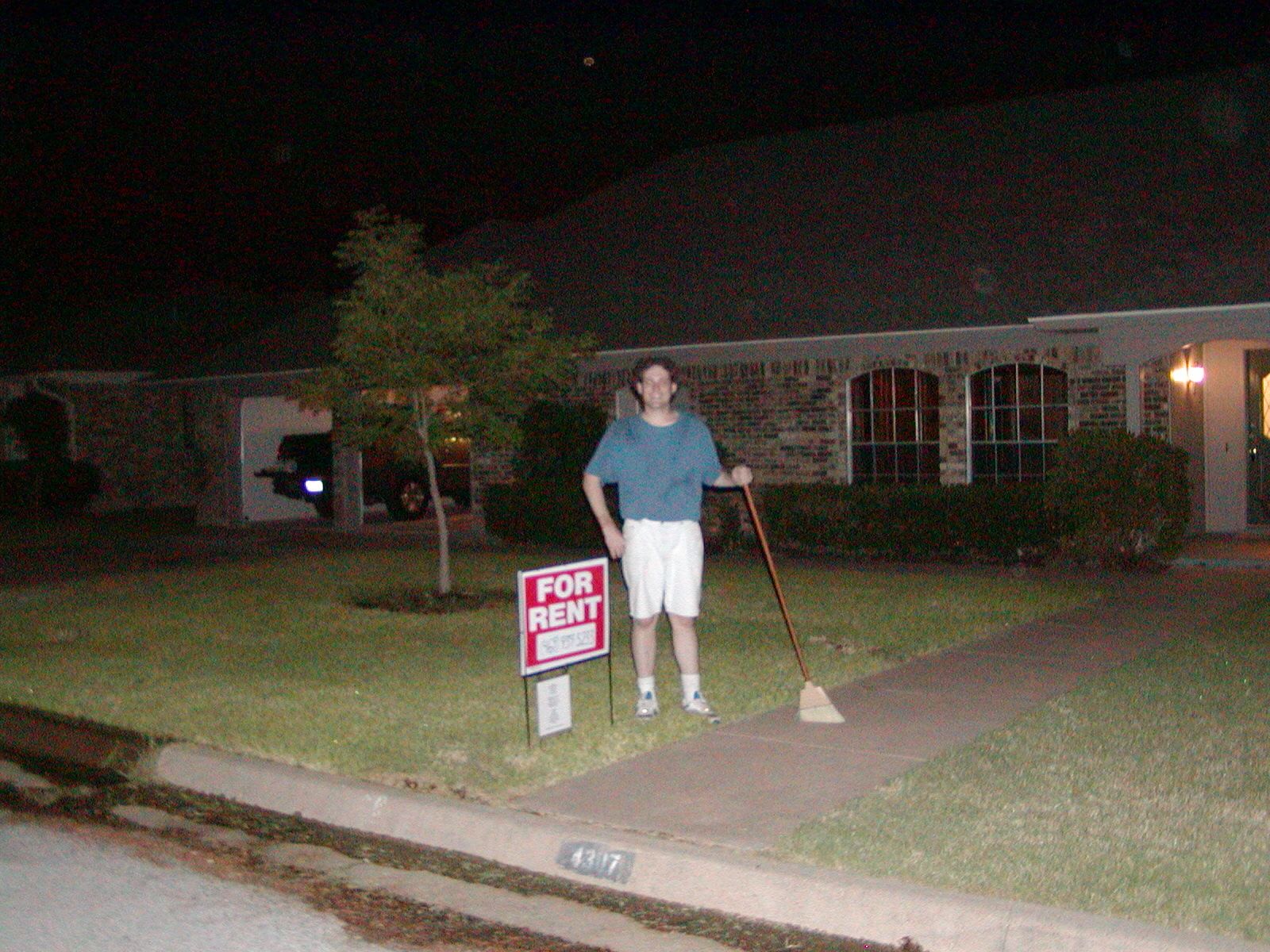
On the doorstep of the Great Financial Crisis of 2008, renters could “buy” the house next door with an interest-only ARM, making their payments – temporarily – half of what I needed to charge for rent to break even. Due to the discrepancy, my rental sat empty for months. Struggling to make ends meet, this path wasn’t making me happy either.
The economic downturn meant layoffs, and I was fired for “non-performance” despite bringing in millions in revenue. I was an easy payroll reduction. In the moment, I was bitter, pissed, and down to my last $2,000 in the bank account. I now had my own house, too, with another mortgage and expenses to pay. I still had the rental property, generating rent intermittently, barely covering the carrying costs. While I was not destitute, facing the last of my liquid cash was sobering.
I’d worked so hard, and I was happier – yet, after years of self-directed efforts, where were the results? Lots of self-questioning, and even self-loathing for having made mistakes and not taken the safer, more certain path. Suddenly a hamster wheel wasn’t such a bad option. At least I could have relied on the wheel to keep spinning. In New York City, even the struggle had been dressed up – the prestigious address, the name on the card, the outward proof I’d made it. Texas stripped all of that away and left only the math and a dangerously low bank balance. Had I just traded one hamster wheel for another that looked different but trapped me just the same?
When I was fired from that last job, my internal compass was suddenly clear: no more jobs, no more working for someone else. I needed to be the beneficiary of the value I was creating. But how? Where? In what direction? I wouldn’t connect those dots until years later.
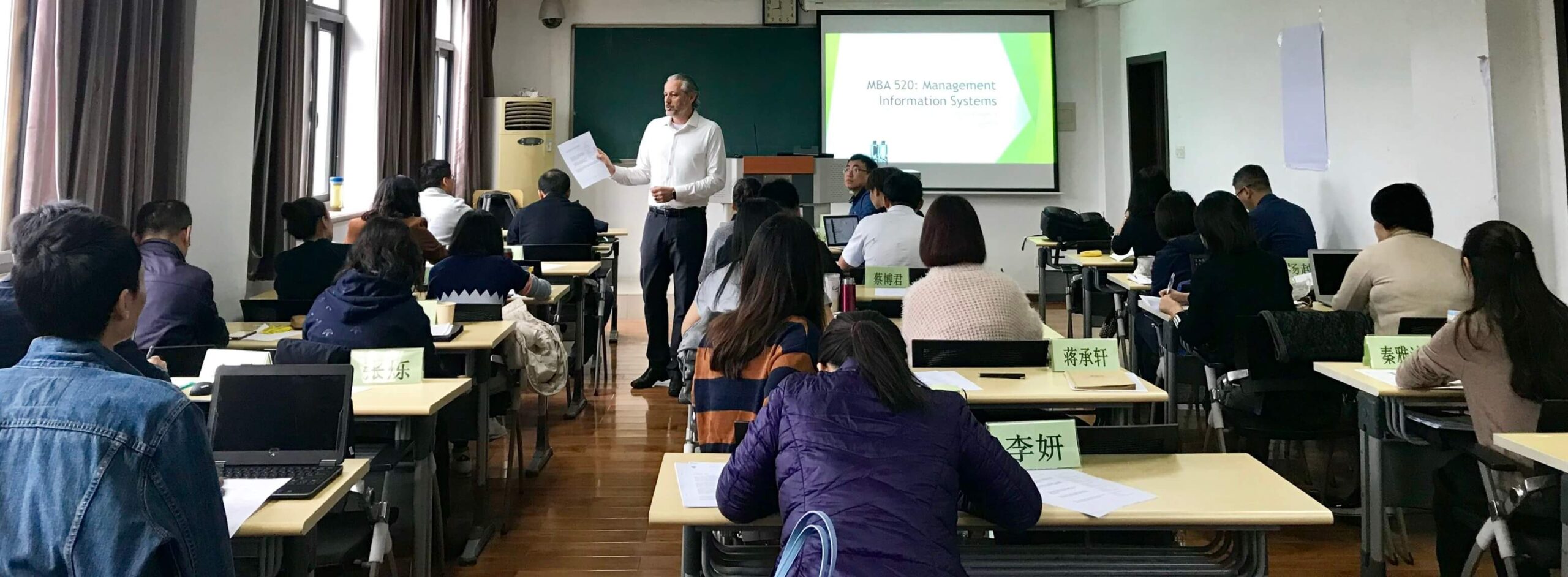
Seemingly, my education and degrees were not a guaranteed path to a job and financial success. I leaned into those important credentials, rediscovered my passion for learning, and wanted to give it back in my own way. The surest way to truly learn something is to teach it – a siren song to a learner. I landed an adjunct professor position at a Tier 1 university. Once again I hustled, taking on as many undergraduate, graduate, and executive education courses as they would allow me, leveraging my passions and experiences in the triangle I knew best: technology, international business, and entrepreneurship.
Financially, the $3,000 per class per semester teaching stipend translated to less than minimum hourly wage. But I was having fun, and I was exploring my passions. I was once again sliding the fader of my “enough” equation toward inner contentment. The side hustle fulfilled me, though it wasn’t growing my net worth in any way. In the midst of this delicate balancing act, the position provided valuable financial stability. I had some mental space to evaluate my life’s choices and consider options going forward.
Throughout my life I’d been irked by watching someone who was clearly excellent at one thing – a sport, a musical instrument, a genius in science. Their life path was clear from the get-go; they never had to ponder their direction. Through voracious learning and putting in the hours, I had become better than average at many things, but an expert in none. I’d get bored with a single focus, and my varied interests ran far and wide. How could I, a Jack of all trades, find my one calling? How could I turn general knowledge into personal success and financial abundance?
The answer, once again, appeared to be perseverance. And a healthy dose of serendipity. The harder I worked, the luckier I got. I didn’t need to be the top expert, or the smartest one on a subject, but I was willing to show up when everyone else had clocked out for the weekend.
___________________
While I was teaching at the university and figuring out my next move, I also took a volunteer position on the working board of a new Dallas non-profit. It was once again centered on teaching – educating the kids, investing in the next generation. What attracted me to it, beyond the focus on mission, was that it didn’t try to reinvent the bad systems already in place. Yes, the Dallas school districts were failing in their stated purpose.
This non-profit found a niche in the afterschool segment, creating quality programs that leveraged the three hours each day the kids spent between when the school day ended and when they went home. Unsurprisingly, the kids were learning more in those three hours than in the classroom. I was thrilled to help build the foundation of an organization that still thrives nearly two decades later.
I didn’t get paid, and I invested hundreds of hours. But I got to learn, meet people, and deliver impact. It is a thread I keep finding in my life. I love being involved with something where I can see my contribution create an outcome. It is the same feedback loop that would later define sailing for me – adjusting the sails to match the wind, the response near-instant, the boat surging forward when I get it right and stalling when I don’t.
While I was serving on the board, the team was in startup mode. Records for donors, prospects, and volunteers were being bounced between board members and employees in a spreadsheet over email. Not a scalable solution. No privacy of records. Subject to one person editing at a time. Just like the decade prior, when “the internet” was becoming prominent and every business launched an “e-” division, by 2008 “the cloud” was becoming a thing. What if we moved these disparate spreadsheets of vital organizational records into a web-based interface for all stakeholders to access and edit? At that time, a novel idea.
In addition to my board commitments, teaching, and being a landlord, I leaned into my geeky side and spent months experimenting with current web technologies. I created many test sites, analyzed the needs, and tried a multitude of different approaches. Learn, persevere, push. Try. Test. Try. Test.
A particular combination of technical tools kept surfacing as a versatile solution. I set it up on a small server, and the Executive Director immediately embraced it and appreciated the clarity and value the new system brought the organization. Of course, there were many iterations and adjustments, all of which I helped implement.
It took months of my time to launch and provide ongoing support. But I was having fun. Glad to contribute my passion and expertise, for free. Not everything was about the financial ROI. Sometimes I just wanted to learn, contribute, give back. Slowly, I continued learning about myself – reflecting, understanding what makes me feel accomplished and satisfied when I invest my time and energy into something. Not because there was an immediate payoff. Because it fed my soul.
The Executive Director, proud of the new system, told everyone in the non-profit community how much it had helped and accelerated the organization’s impact. She happily showed off the system to other non-profit leaders.
One day my phone rang, with an enthusiastic stranger on the other end. Would I build a similar solution for their non-profit? My initial response was that I had built it as a labor of love for the organization where I served on the board, and I didn’t really have the capacity to volunteer my time for another. Their response stunned me: “We’d be glad to pay you for the work.” Oh? Oh! That’s an option?
—————————–
That’s it for today! There’s more to the story (of course) but there’s still a long way to go so I broke it up into two posts.
Next time we’ll continue with Sailor’s story and find out what happened. Stay tuned.

Incredible. What a life. I wish more Americans could really understand what life under communism meant for you. You should write a book or at least an op ed for the WSJ and New York Times!
100% agree. INCREDIBLE story. Should be mandatory reading for our primary schools!!
Thank you both. A book has crossed our minds more than once.
For now, this series is the first time I have put any of it on paper, and the response here tells me it was worth doing.
Really appreciate you taking the time to share your story. Most “born in America”, including myself, have no concept what life is like under communism.
I cannot imagine leaving home for another country where I don’t know the language and have zero support system. Your story certainly highlights my belief that there is “value in the struggle”
Value in the struggle is exactly it. You don’t build muscle swimming downstream.
I would not wish the scarcity on anyone, but I would not trade what it taught me either. At seventeen, it felt more like an adventure than a risk – everything was new and worth investigating. And I had nothing to lose, really – returning back with tail between my legs would have bruised my ego, but keeping my ego intact wasn’t part of my value system or approach to personal growth.
What an awesome read! Look forward to part 2.
Great read! Can’t wait for the next instalment. Thank you!
My mother-in-law escaped from East Germany. Americans need to learn from people like you and her about the evils of communism. Glad you persevered.
Escaping East Germany took the kind of courage I never had to find – by the time I left, the Wall just came down and I left legally. Your mother-in-law’s story is one worth writing down, if it hasn’t been already.
Most interesting and informative post. I too, found many article’s that were beneficial and in many case similar to what the author spoke off when I and my family entered the United States of America during 1948. The Sailor of this posting has a talent that he uses to tell this story. Making hardships a lesson of learning is never an easy-to-use tool. I wonder now. What will be the learning process for retirement life? Looking forward to reading the coming posting.
Thank you, Bernd. Arriving in 1948 would have been a much harder landing than mine.
As for retirement, the learning did not stop, it just changed subject. We are still not sure “retirement” is even the right word for what we’re doing, and that is where the series is headed in the final post.
Waouh… great story and story teller… I will be here for the next chapter
This is the most fascinating story I have ever read on this blog! Can’t wait for the next installment!
What a story..and so well written
Cant wait meeting you
Thank you, Fabio! Soon we will share an anchorage – and a coffee in the cockpit.
Part 2 continues: https://esimoney.com/its-not-a-number-part-2/
Thank you Guy, Adam, Komako and Pam for waiting on it.
I had no idea about the “communist Eastern Bloc” experience. Look at you now! I am proud to know you!
Thank you, Nancy. Coming from someone who has known me as long as you have, that means a great deal.
Facinating , what a history of live!
Thank you, Mario. I hope our paths cross one of these days!
Reading this as an entrepreneur born in America and I am blown away by the perspective. So different yet relatable, a highly potent experience of big dreams, risk on, striving and perseverance!
Thank you, Ryan. The starting line was different, but the entrepreneur’s part is the same anywhere: a big dream, no guarantees, and getting back up more times than you planned to. You know that road as well as I do. It means a lot coming from you.