
Welcome back to our series from two Millionaire Money Mentors who are living out their retirement dream by sailing around the world.
So far we’ve covered When Is Enough Enough? We Sold Everything to Find Out, It’s Not a Number, It’s Not a Number, Part 2 and The Pursuit of Enough. If you missed any of those, please read them first as today’s post builds on them.
This post is written by the Admiral and the Sailor and wraps up their story.
What’s yet to be completed (after this post) is the very last post in this series where they will answer questions from ESI Money readers about this lifestyle. So please leave your questions in the comments below! They want to answer questions you’re interested in!
So I now turn it over to the Admiral and Sailor…
————————————–
After two years of living aboard a sailboat in the Mediterranean, the smell of freshly ground coffee filling the cockpit remains a morning touchstone. We treasure this sliver of time we share, reflecting and connecting, with a new backyard to observe every few days as we move our floating home.
“What town is this again?” is a common question. Today, we awoke in a harbor that was not contemplated in our routing spreadsheet. We rarely know exactly where we are going when we start each new day.
Yesterday’s winds kept us on our toes, changing our destination every hour or two, as we had to shift our plan along with what Mother Nature was presenting. The Mediterranean weather patterns are unpredictable.
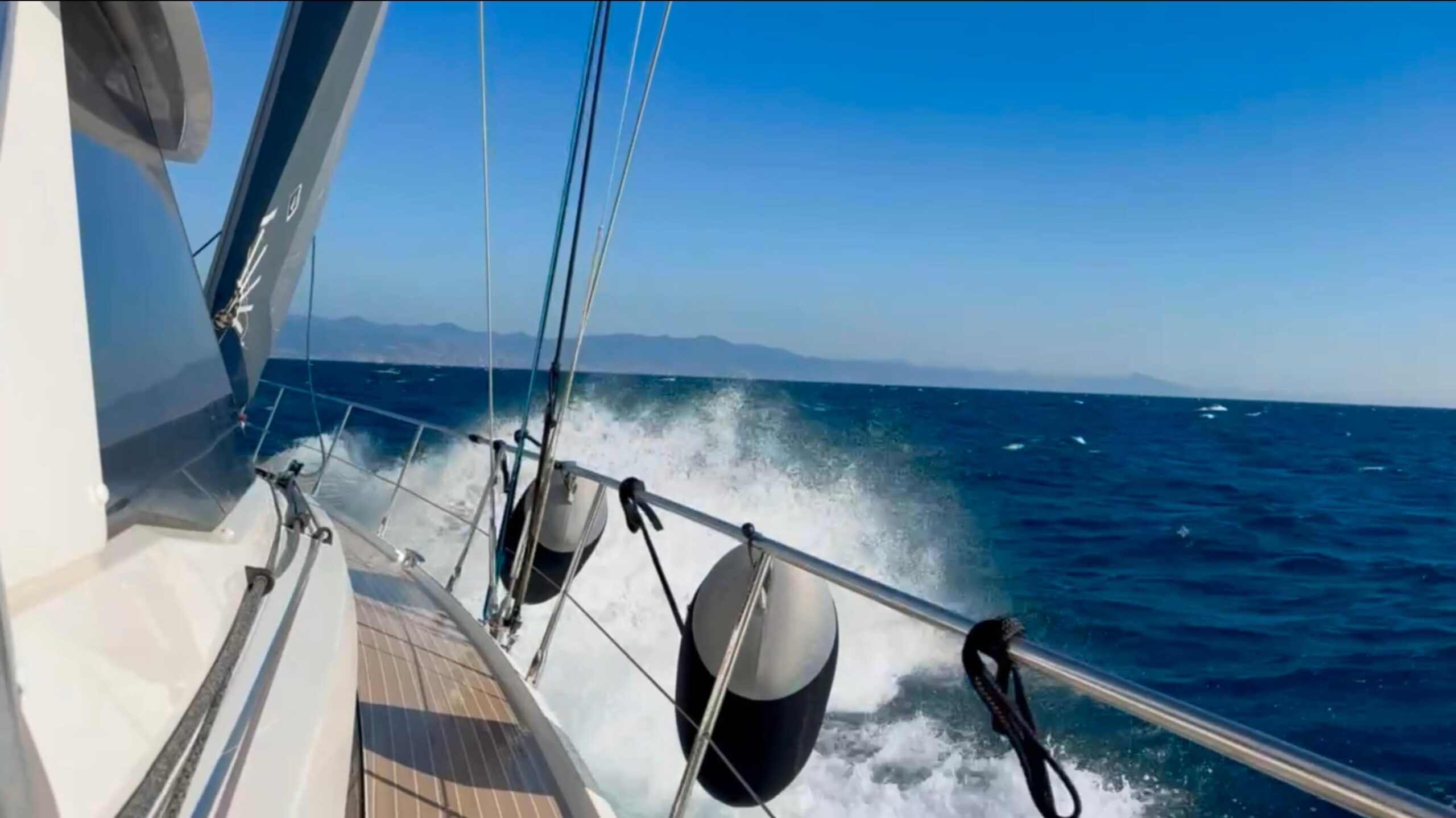
In less than 5 hours, we experienced the full spectrum: from flat calm, to perfect “champagne sailing” conditions, to 30-knot gusts and a 10-foot swell that had us aiming for the nearest anchorage to avoid the prolonged discomfort. Flexibility and curiosity are two of the muscles we often exercise in this lifestyle.
We are enjoying our morning coffee in the cockpit just outside of Galaxidi, Greece — a picturesque seaside town in the Gulf of Corinth, population under 2,000. This is how we discover small villages we have never heard of, and slow travel through many of the lesser-known parts of heavily-visited countries. After the 42 Greek islands we visited over our 6 months of exploring, we are just beginning to absorb the rich culture. We will make our way west into the Ionian islands as winds allow, and tee up for our 3-day nonstop passage to Malta.
In the two years since taking delivery of our boat on the Mediterranean coast of France, we have traveled over 7,000 nautical miles through 8 countries. We might anchor for days in a remote bay waiting for the next favorable weather window. Such weather delays allow us to spend enough time in small villages to meet the local residents and learn about life through their eyes.
We often skip the more popular tourist destinations favored by large cruise ships, and opt for local experiences in quaint fishing harbors and town quays built by the Venetians. We make new friends along the way. We learn bits of new languages. We try new foods, local wines and spirits. We find ourselves adopting new habits, mannerisms, and intonation after being immersed in a culture for months at a time.
The slow travel style of cruising and life aboard best suits our preferences and personalities. The steep learning and growth curve is difficult to quantify — but it is ever-present. Our confidence in sailing continues to build, as we navigate and overcome challenging situations. Every day, a new set of tests and lessons, and a new opportunity to discover more about ourselves. Our relationship is deepened by the communication, collaboration, and partnership this life requires.
Not once have we missed the thousands of possessions that we gave away or sold. We measure our wealth by the richness of our experiences.
When we meet new people in this cruising lifestyle, we are confronted with the challenge of answering the question about our profession, and how we manage to work while cruising full time. In a quick conversation, we simply point to our Starlink dish. “We are always connected, and we can handle our business matters whenever needed.” That answer seems to satisfy most inquirers, making it clear they really are just looking to frame our life within their existing paradigm. We do not mind.
If we are talking with new friends who authentically engage in deeper discussions, the conversation often evolves to include the word “retirement”. We struggle with the term. We know we are too young to be of typical retirement age. After decades of chasing the proverbial brass ring, we each arrived at our version of “enough”. We appreciate our financial freedom and the opportunity to explore new versions of ourselves that do not revolve around building more wealth or professional recognition.
We currently have no intention of starting another business, yet we have not excluded the possibility of future entrepreneurial endeavors. Not for the money, but for the personal satisfaction of making a meaningful contribution in the world.
This life is not what most would envision when painting their picture of retirement. Our days are not sedentary, and we do not sit in rocking chairs and reflect on a life well-lived. Friends seem surprised when we say we struggle to find time to read, write, or sit and ponder life.
Living aboard is among the most active and strenuous versions of retirement one could imagine — with a never-ending list of boat maintenance and upkeep, repairs, sourcing parts and supplies, route planning, navigating legal systems to enter new countries, and (of course) the very physically and mentally demanding activity of sailing.
Are we retired? We do not feel like we are passively relaxing, savoring the rewards of our decades of hard work. We are busier than ever and always being challenged and pushed just to the edge of our comfort zone. At the same time, we no longer have time-bound or geographically constraining obligations to earn income. We have not yet found the word for this state of being, but the word “retired” does not seem to adequately capture it.
The scarcity mindset from our respective upbringings is not something that disappears, regardless of the numbers on our personal balance sheet. We have our moments of fear and uncertainty, those childhood voices sneaking back into the foreground, whispering to us that at any moment we could be fighting for survival once again. Is it true? Perhaps it could be, if the US dollar completely devalues, or if underlying real estate values disintegrate in an instant.
When those fears appear, one of us has to remind the other that if those things happen, we will have bigger and more complex issues to manage. We have both proven ourselves as resourceful and capable enough to navigate through tough times. If faced with such a situation, we will do so again.
Scarcity fears seep beyond analyzing the bank account. Did we irreversibly dispose of all of our valuables and assets in the US, and will we one day regret not holding on to those possessions? Did we walk away from our careers and entrepreneurial identities too soon? What if we need to lean into our respective professional status to build more wealth later in life? Are we going to one day feel like our lives are meaningless if we are not continuing to build our accomplishments and reputation? These are unanswerable questions, yet we ponder them frequently.
There are times when our scarcity fears reappear, when we question our respective “enough” assessment. Those moments might send one of us spiraling, or leave one of us consumed by anxiety and worry about the future. As long as one of us is thinking clearly when the other is having a moment of doubt, we manage through the emotions. As we have said many times, about many topics, when it comes to our partnership: We both cannot be broken at the same time. The vast majority of the time, we help each other manage the doubts, fears, and emotions.
The feeling of enough is not a one-time box to be checked and forgotten. It is an ongoing process, arrived at from within, requiring constant introspection, inner growth, and vulnerability with each other — not a number reached but a continuously chosen mindset.
___________________
Our assets are held in a wide range of conservative investments. Most are asset-backed real estate loans to give us comfort that our principal maintains value even if the dividends sometimes do not materialize as projected. Some investments are in operating businesses where we have a personal relationship or knowledge that gives us confidence in the business model and the operators. We keep a healthy reserve in bonds and mutual funds, to be immediately available if needed.
We do not need to hit another financial home run, just solid singles or doubles, in a consistent way. Our investments generate enough to cover our expenses and still add meaningfully to our net worth in a way that exceeds inflation.
We are frugal most of the time when it comes to household expenses. We scan for opportunities to spend less on the same or similar item. We do not care about expensive designer clothing — we often cycle through the same Costco sunshirts, as they are practical and necessary when living exposed to the sun all day, every day. Extending the life of spare parts or supplies is as much about the difficulty in sourcing as it is about saving a few dollars here or there.
We often tease one another about the level of preservation, as we make a game out of how much unnecessary spending we can avoid.
In matters of our safety and comfort aboard, we do not compromise. If we need a spare part just in case something goes awry, we buy it, price tag aside. Safety equipment is of the highest quality, and we do not cut corners there.
If we find an accessory or lifestyle item that will add joy to our cruising experience, one of us will convince the other that we deserve it. We often reposition our comfort-focused purchase decisions as gifts for one another, as we are both more comfortable spending money on a loved one than on ourselves. It is one of several ways we actively work to break the deeply embedded scarcity mindset.
When presented with a unique opportunity to relish our financial independence, we go all in. A full day at a 5-star luxury spa is a welcome respite after weeks of boat maintenance and navigating challenging waters, figuratively and literally. We indulge in Michelin-rated dinners when opportunities arise. The Admiral keeps our wine storage well stocked with high-quality wines gathered from the private winery outings we discover in each country we visit.
When we choose to explore a historic site or a more tourist-focused location, we do so with a private driver and tour guide, to allow for a curated experience. Once or twice per year, if we need to travel beyond our floating home, we fly business class.
We have learned to exercise generosity and gifting in a way that aligns with our values. We have no interest in endowments or writing large checks to put a name on a building as our legacy. Specific causes may get direct financial donations.
What we find deeply fulfilling is making a meaningful contribution to improve and ease the life of young people we care about and mentor. A financial gift today makes a direct impact rather than allocating a larger amount in our will, which will hopefully not be relevant for a long time. Our intention is to reward hard work and personal responsibility by removing obstacles we recognize from our own pasts.
Our spending philosophy is simple: Seek value in functional things. Invest where there is impact on our quality of life. Splurge on creating memorable moments. We are generous with people we love. At the end of each month, we reconcile our spending and reflect on any anomalies. A few times per year we pause to reassure ourselves that we are far from outspending our income, much less the underlying assets. At the end of each year, we find that our way of spending, and of living, further reinforces our financial independence for decades to come.
Life aboard, and abroad, comes with complications.
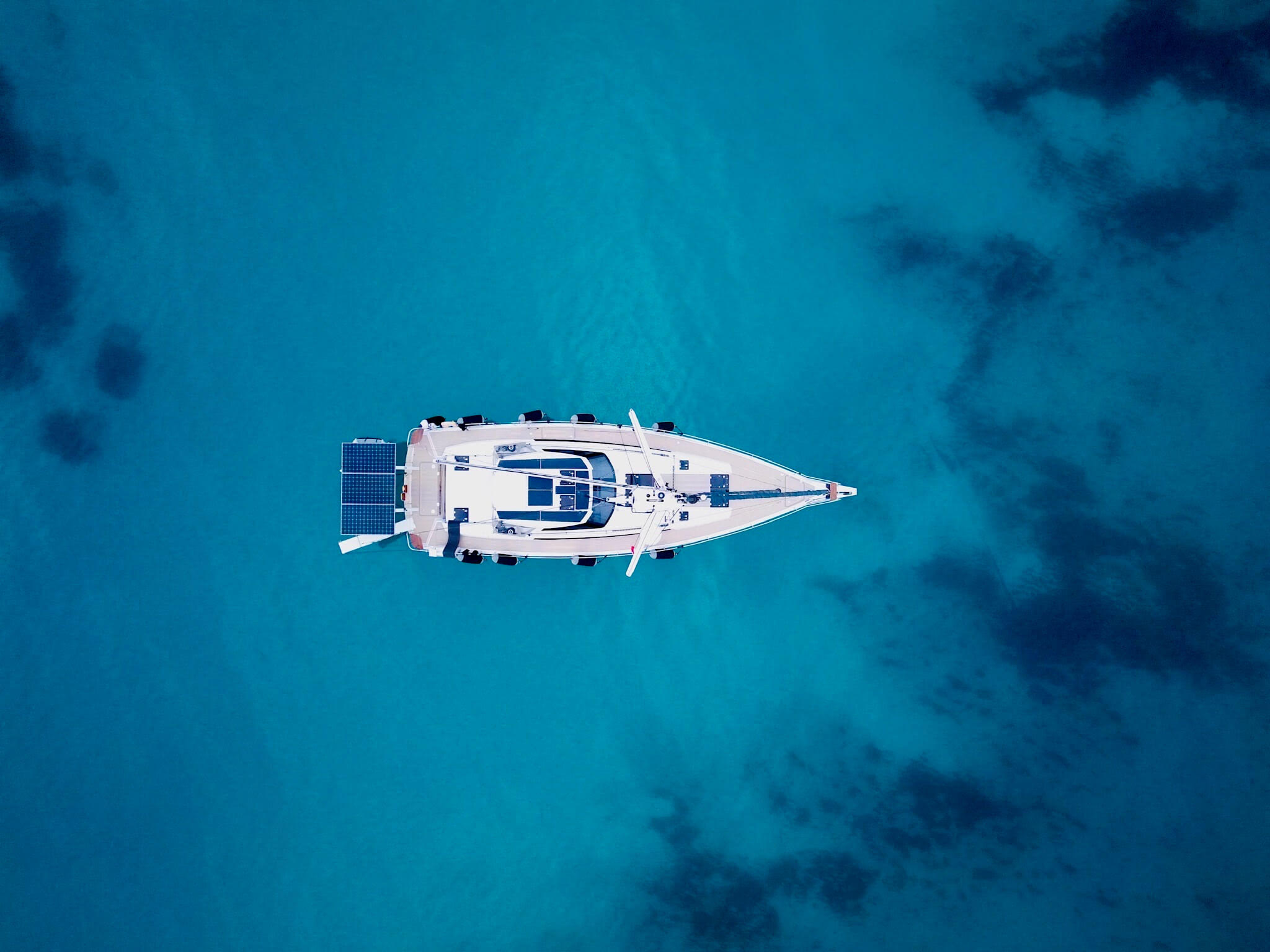
Our home is a self-contained ecosystem, with its own power plant (solar, generator), power storage facilities (lithium batteries), a water production system (desalination), and a waste management system (black water holding tanks) — all being bounced around and floating in saltwater, an extremely corrosive environment. Hardly a week goes by without a new repair project appearing that needs immediate attention, and we are often far away from any external source of help. As such, spare parts, mechanical know-how, and self-sufficiency are key.
Our home is also constantly moving, so we have no shipping address. Rarely can we pinpoint a specific date of arrival into a port. Many conditions must be met to receive a package — be it an Amazon order or a spare part. Where will we be with enough advance notice for delivery? Is there a willing recipient who will hold a package until our arrival? Will customs or a local worker strike interfere with the promised delivery date? Sourcing parts and supplies is a mental exercise that requires tremendous flexibility and patience — and at times the acceptance that we will never see a package and will need to restart the whole process.
For our regular mail in the US, we have a service that receives, opens, and scans mail. We should have signed up for that years ago, as the simplicity, convenience, and lack of junk mail are well worth the nominal monthly fee. When someone asks if they can mail us a physical object, we often joke that if they want us to receive a photograph of the item, then yes.
We cannot plan with any degree of certainty when we will find a well-stocked grocery store, produce market, or butcher. When we do, we rarely find familiar products, since we move from country to country where brands change and local preferences prevail. Labels are in the local language. Food management adapts, and meal preparation generally starts with “What do we have to work with?” rather than strictly following a prescribed recipe. The Admiral’s adaptability and creativity make it work, and we enjoy discovering local ingredients in each new location.
The cost of this lifestyle on relationships is real. Being thousands of miles and many time zones away from close friends and family makes staying connected more difficult. It requires intention and commitment from both sides. Many friendships do not survive such demands.
Actively participating in established communities takes on new meaning. It’s no longer an option to fly to a conference on a whim, or hop over to another city for a special event. Choices are made, and priorities are redefined. The lifestyle forces lessons of what is important, and the value of true friendships that endure.
We did not choose this life because it is easy. We accept the challenges along with the joys, and the amazing moments we are privileged to experience. In between the intense amounts of work and hardship this life often requires, the moments of bliss gently remind us to enjoy the journey — when the dolphins swim alongside while under sail, when the perfect sunset reflects on the water, the canvas of the starry nights against the backdrop of the Milky Way, the touch of kindness from amazing humans we encounter in our travels.
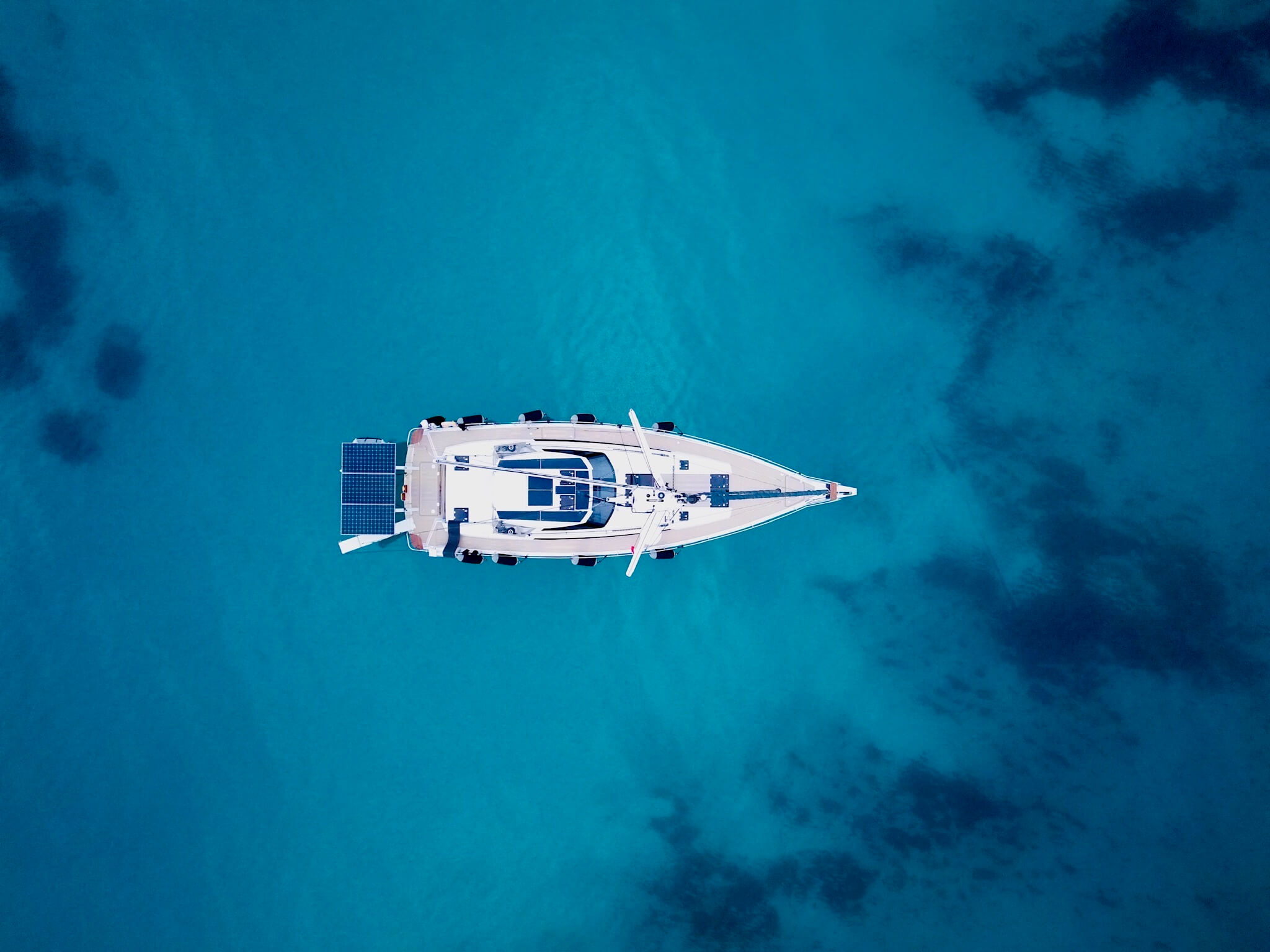
Partnership is key. Living together in less than 500 square feet, at sea for days, sometimes weeks at a time without stepping on land, is not a typical relationship dynamic. Add to the physical proximity the fact that we are frequently in high-stress situations. We rely on one another for our safety, and we trust each other to manage our respective responsibilities.
Our skillsets are well matched. We each have our strengths that are essential for this lifestyle.
Sailor is an insatiable learner, with an engineering mind. His “Mr. Fix It” skills keep the boat running. From plumbing to electrical to diesel engine troubleshooting, he can assess a problem, and is confident in tackling the various systems onboard. He optimizes our resource management, creates dashboards to track data that alerts us to concerns, usually before they become failures. He studies sail trim and configuration, and is constantly improving our sailing performance.
The Admiral’s self-taught, no-instructions problem-solving skills of childhood prove useful in a multitude of situations. She manages the provisioning and onboard organization, and handles the daily needs of creating a comfortable life aboard. Her wanderlust and love of cultural immersion, combined with the tech savviness to use the various route planning tools available, allow her to choose destinations and create navigational plans.
When we reflect on the years of running a business together, we realize that it was a wonderful test of our ability to leverage our respective skills and partner when the stakes are high. The division of labor in the business was proof that we can operate as complementary specialists. Now we have taken that collaboration into every aspect of our lives and our floating home.
We continue to learn new and better ways to share this life. It’s not perfect. There are moments when communication breaks down. We are both committed to the personal growth and self-awareness required to move through those challenges when they occur. We are also two individuals that have different personalities and different needs. We have each found our outlets to satisfy those needs.
Sailor revels in tinkering with technology — for joy, not income. After decades of using his software engineering skills as the means to a financial end, he now spends hours ideating, programming, and perfecting new software tools to make life aboard easier. As an advocate of open-source software, he shares his creations with the marine community, resulting in a broad base of users that benefit from and appreciate his efforts. Receiving an email from a fellow cruiser in a remote part of the world, explaining with gratitude how one tool helped him navigate a difficult situation, always brings a smile to Sailor’s face.
The Admiral’s ongoing passion for leadership, diplomacy, and cross-cultural work keeps her engaged in efforts where those skills can be invested for global impact. She serves on a non-profit board and coaches women entrepreneurs. Participating as a speaker or facilitator in virtual events is a challenge when the boat is rocking side to side, but The Admiral finds a way and the audience is usually none the wiser. Writing has become her outlet for self-expression and reflection. Frequent posts to our blog document our travels, as well as the personal growth and insights gained along the way. She has also been a key contributor to several women’s leadership books.
One thing we share is the need to stay challenged, the need to keep learning and growing, and the need to keep pushing past comfort and complacency.
When we embarked on this adventure, we used the placeholder of 10 years to help us mentally frame the decision to not maintain any possessions in the US. So far, it has been two years and we have many more places to discover, more oceans to cross, more experiences and learning ahead. At this pace, 10 years may not be enough — and we’re OK with that!
Of course, there are days when we question our life choice, and wonder why things have to be so hard. We could have an easy life where we turn on the induction stove top without worrying about the battery bank power levels, or turn on the faucet without acknowledging the remaining amount of fresh water in our 160-gallon tank. In a house, systems run for years without intervention. Any needed products can be delivered to the doorstep within a day, or even hours.
We could eliminate the constant need to relocate our home due to weather conditions, and deal with the complex legalities of moving from country to country. We could live in a world where a housekeeper can clean the house weekly. As we have done many times throughout our lives, we still choose the harder path. The path less traveled. The path we find much more rewarding.
The most common reason people “swallow the anchor” (the term for leaving the live aboard lifestyle) is aging and related health issues. Will one of us have a medical reason why this life is no longer possible? Will declining stamina cause the lack of energy to keep going?
Our priorities or desires for what we want from life might one day be different. Perhaps a place will capture our hearts and the pull to stay will win out over the wanderlust curiosity of the next destination. Or a family obligation might demand more of our in-person attention. Perhaps we will simply decide that it’s time for an easier life.
For today, the growth from challenging ourselves, and the fascination with discovering the world, outweighs the hardship. We have promised one another that if either of us feels strongly that it is time to stop, we stop. For now, there is no end date in sight. Information is imperfect. Uncertainty is the only constant. Another unknown might be around the corner, and we know that at any time, we may need to change course.
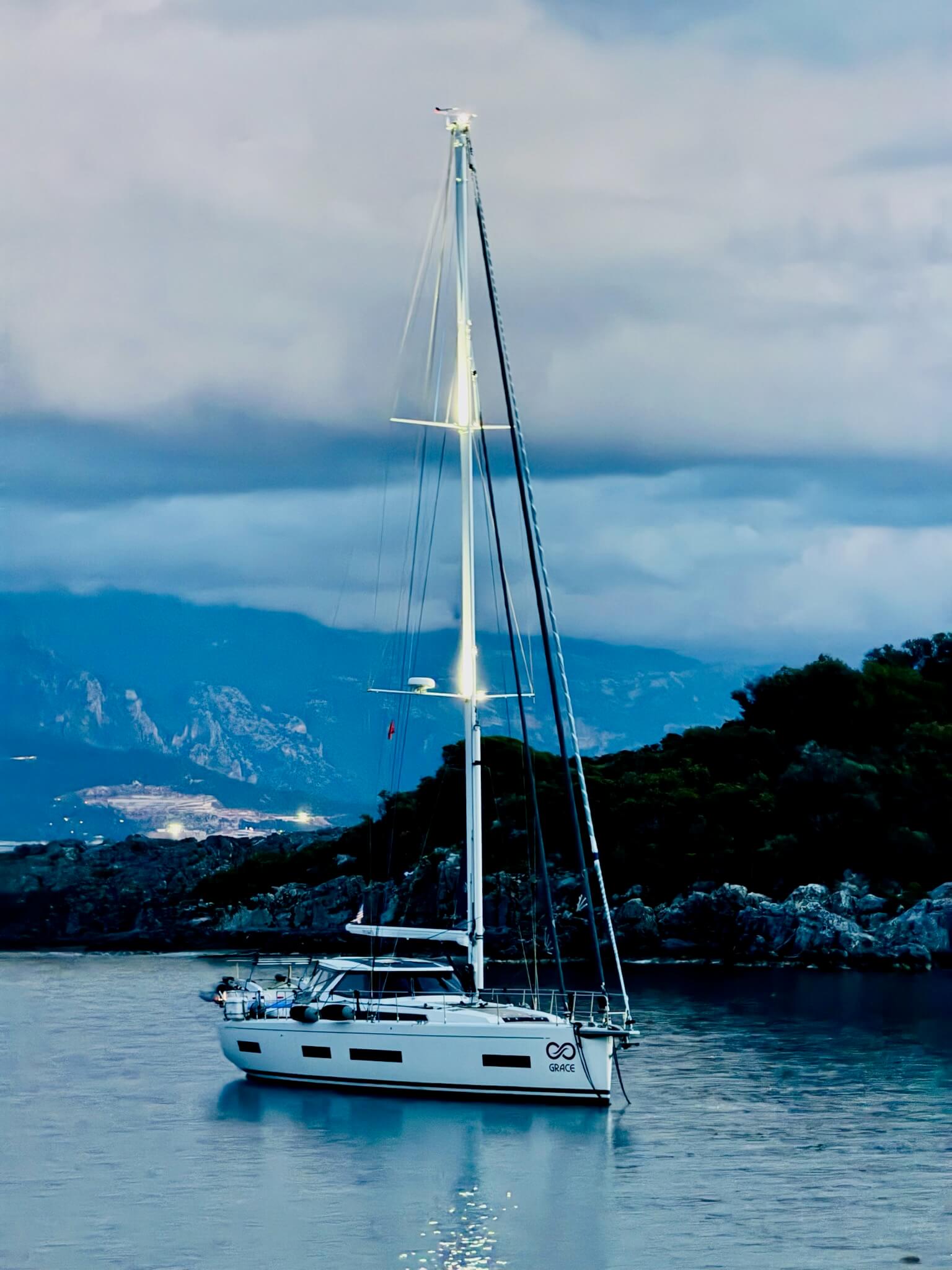
When Sailor and The Admiral met 12 years ago, living aboard a sailboat and sailing around the world was nowhere on the horizon. What they were both committed to was navigating to a place of financial independence, and the personal growth it would take to overcome the scarcity mindset that was deeply infused in each of them. They were also committed to staying curious, consistently evolving, and remaining active and young at heart. For Sailor and The Admiral, sailing and life aboard has created the environment where that commitment takes root.
For Sailor, leaving Eastern Europe as a teenager was an act of fleeing scarcity and a mindset of resignation. He pursued opportunity and defined his own future by moving away from a world where those efforts are not rewarded. Life aboard returned him to Europe in a very different way. The geography was predetermined by the selection of vessel on which to live out this dream, which makes for a bit of karmic irony. But this time, rather than running away, the move was driven by a choice, powered by the financial freedom he created.
The Admiral continues her pursuit of self-discovery and growth, and finds new ways to challenge herself and build confidence in her abilities outside the office or the board room. The constant cross-cultural immersion feeds her with new flavors of world views. She is no longer relentlessly compelled by the need to prove that she is enough, but by the genuine interest to contribute to the world when opportunities truly align.
Their lives impressed upon them the importance of making deliberate choices and doing what it takes to create the desired outcomes. Dreams of how to spend early retirement are not stumbled into by accident. They are not wishes that materialize after enough hope and prayer. They do not just happen to the “lucky” ones. They happen when commitment meets the willingness to do the work, take a risk, and trust in one’s own abilities.
We often reflect on a pair of conversations we had before moving aboard full-time, both in the same day, while we were in the process of selling our prior sailboat.
The first couple we met arrived at the marina as interested buyers. We had already accepted an offer before the time of their visit but they insisted on coming for a viewing. Ken was 75. For more than two decades he had been dreaming of getting a sailboat, living aboard, and taking trips around the Pacific Northwest. His balance was now off, and he had early signs of dementia. Yet, he still wanted to pursue the dream. His wife, Fiona, broke down in tears, clutching The Admiral’s knee while sitting side by side in the stateroom. “Thank you for telling Ken that this boat was already sold!” She was lamenting that some dreams go unfulfilled in the grand scheme of one’s life. The time to pull the trigger on their sailing dream was more than 20 years ago. She was scared of being out on the water with her husband. She did not feel it was safe, for either of them.
That same evening we met another couple, Terry and Barb, both 76 years old. They bought their sailboat brand new when they thought they could barely afford it, 40 years prior. They’d been sailing and living their dreams. They raised their son aboard while sailing and working in the Pacific Northwest. They both admit they’re less nimble and weaker, and that buying a new (to them) boat at this point would be undue hardship. The learning curve would be too steep. They know their boat well after 4 decades. They know exactly what to expect, where to hold on, and have made adaptations to accommodate their aging physical needs. They were aware that the time would come when this life is no longer possible, but at the time we met, they were still enjoying their life aboard.
Two couples. Similar dreams. One made it happen, one was still holding onto hope.
Sailing and life aboard a sailboat is one dream turned into reality. There are many versions of dreams that inspire efforts to retire early. Whatever your dream, will you reach the finish line and live your early retirement life before health and complications make it unattainable? Or will fears of “not enough” keep you chasing one more year, one more accomplishment, 10% more in your bank account? While FIRE is often discussed as the intention, what is the purpose of the pursuit of FI without clarity of the RE plan, and a willingness to take that leap?
We appreciate those of you that read this series, and hope you enjoyed the journey as we shared our stories of how we arrived at this place in life. Our plan is to check in with updates from time to time, so stay tuned for future posts.
We have already received many practical questions about our life aboard: what it costs, how the systems work, route planning and coordination, what breaks and how we fix it. These are the exact types of things our future updates will cover, along with updates on our travels, and topics we have been collecting from the comments on this blog series.
As we shared in our first post, we are not here to sell anything. We have no active business ventures or fundraisers. We’re here because throughout our respective paths from scarcity to enough, communities of like-minded people helped us along the way. We continue to experience the power of community, learning from one another, providing support and perspective. We offer our journey as the impetus to stop waiting and make the necessary decisions to pursue whatever calls you.
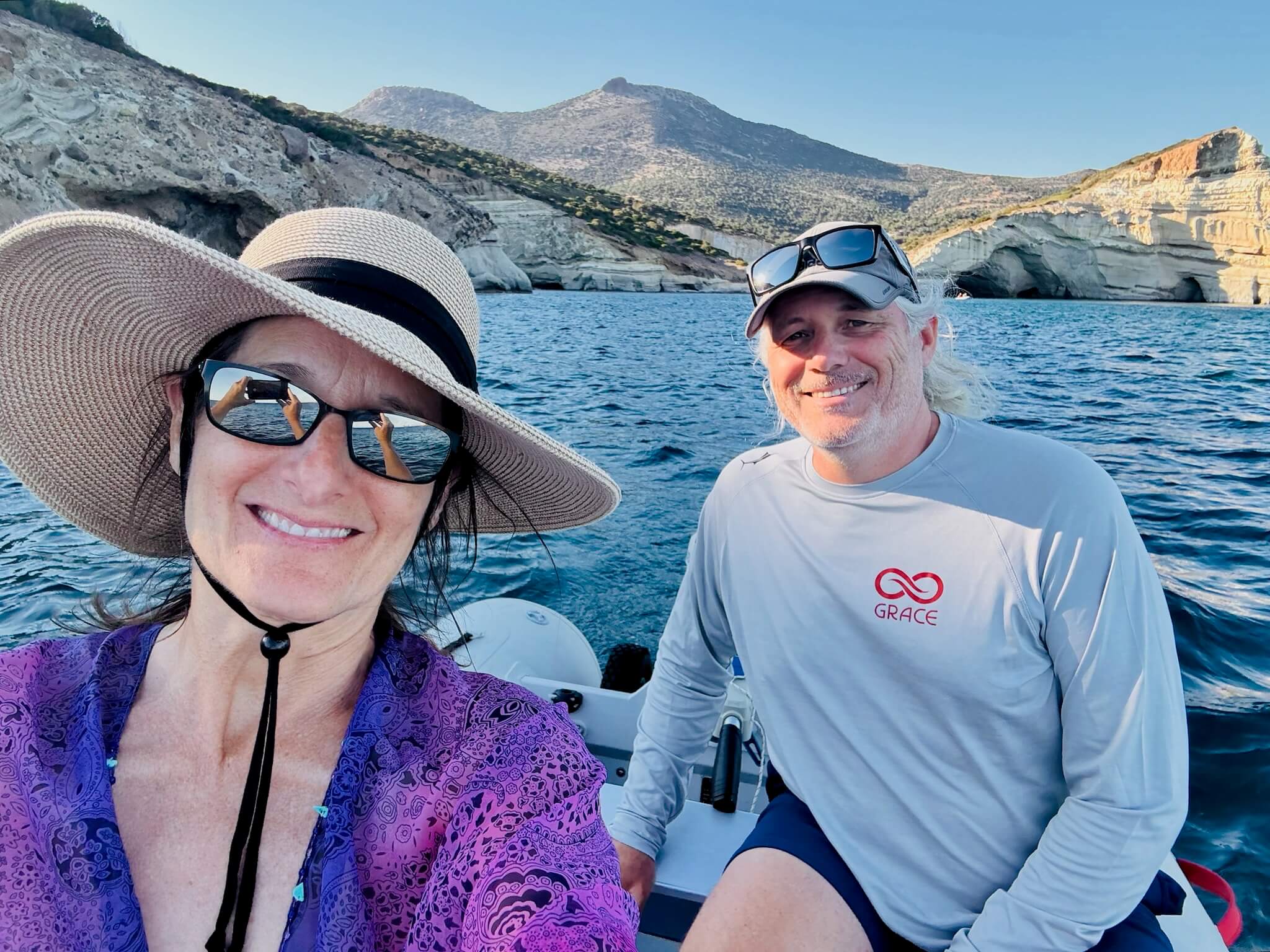
We have written this series as Sailor and The Admiral. In real life, we are Peter and Adrienne sailing aboard GRACE. We share photos and stories of our life afloat at SailingAmazingGrace.com — including many of the questions already asked in the comments: the ongoing impacts of our deconstructed lives, what GRACE looks like inside, how two people share 54 feet of floating home, and of course, where are we sailing next. You can subscribe to receive an email when a new blog is published. We also post on Instagram.
Fair Winds and Following Seas,
Peter and Adrienne

Leave a Reply