
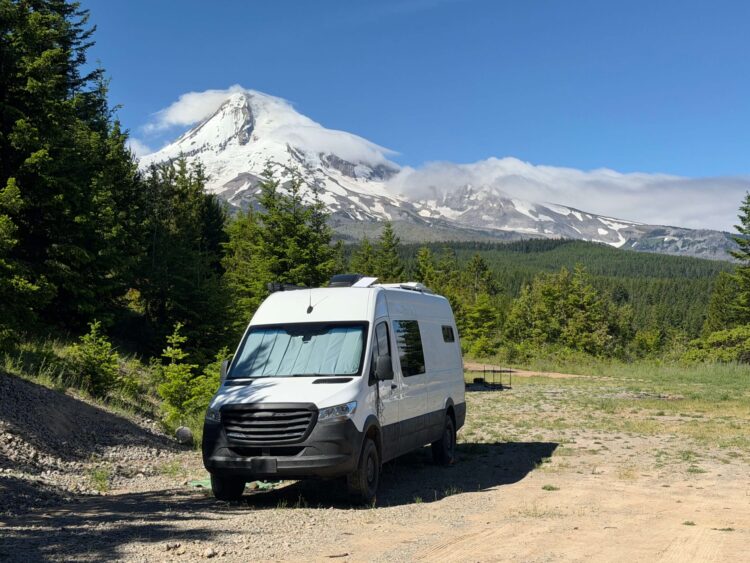
 Today we’re continuing our look at vanlife in retirement with one of our Millionaire Money Mentors and his wife.
In part one, VanLife in Retirement: How We Got Started, we covered how the idea got started, why they chose a van over other travel options, how they bought and converted it, what the build cost, and what they learned during their first trips.
If you haven’t read that post yet, I’d suggest starting there, as today’s article picks up where we left off.
This time we’re getting more into what vanlife is actually like once you’re out on the road.
We’ll look at what it costs to travel this way, what daily life in the van is like, the biggest conveniences and inconveniences, what has and hasn’t worked, how the lifestyle has affected their relationship, and what they’ve learned about retirement and financial independence along the way.
We’ll also get into some of the practical details that I think are especially interesting — things like where they stay, how they handle showers, bathrooms, laundry, electricity, internet access, weather, safety, repairs, and living together in such a small space for weeks at a time.
In other words, part one was largely about building the van and getting started. Part two is about actually living the vanlife.
My questions are in bold italic and his responses follow.
Let’s jump back in…
The Cost of Traveling
What does a typical trip cost?
Our early van trips averaged about $110/day.
On our most recent trip, where we purposefully spent more freely on experiences, our average spending increased to $130/day.
Our total spending for the 11-week trip was $10,148.
Can you break those costs down among fuel, campsites, food, attractions, and other expenses?
Food = 33%. This is primarily groceries, with an occasional meal out at a restaurant.
Fuel = 25%. Our fuel costs increased by about 30% after the war with Iran began. During our summer trip our fuel costs came out to 29 cents per mile, which I still feel is a small price to pay for traveling in an RV.
Fun = 22%. This includes experiences, occasional souvenirs, postcards, etc.
Misc = 11%. Laundry, Starlink, ferries, van supplies etc.
Camping = 9%. This is where we save the most compared to those who travel in Class A and C RVs, as we rarely stay in RV parks.
I mentioned Harvest Host earlier, where we spend at least $30 with a host during a one-night stay. This was usually food/beverage or an experience (whitewater rafting), so often these stay expenses went under Food or Fun, not Camping.
What recurring annual costs come with owning the van, such as insurance, registration, maintenance, storage, and repairs?
Insurance and registration are around $100/month.
Due to the high number of miles we’re driving, maintenance is averaging $200. Sprinters have required A and B servicing that is more easily done at the dealer, but they are pricey.
Because the van is a Class B, it fits easily in our driveway and doesn’t violate any HOA policies, so storage costs us nothing.
Is traveling this way less expensive than staying in hotels or traveling conventionally?
Yes, so much less.
By just eliminating hotels, airfare, and car rentals, traveling in the van costs just a fraction of our pre-van travels.
Having a kitchen on board allows us to save even more by not eating out as much as a normal vacation.
What costs more than people might expect?
Food!
Although we prepare and eat most of our meals in the van, the groceries cost more than what we buy at home.
We are usually in more remote locations where food prices are higher, especially for organic and higher quality food.
But it’s way cheaper than eating out, and often much better for our waistlines.
What costs less than people might expect?
Visits to National Parks.
We bought the National Parks annual pass for $80, and have visited 23 national parks so far on that pass.
When we camp in a national park, the average night costs around $24. Compare that to $60 or $70 at an RV park.
Outside of the gift shop, nearly every experience in a national park is free.
Daily Life in the Van
Walk us through a typical day while you are traveling.
Much like a successful day at home, our successful travel days follow a set routine.
We are usually up by 6 am, walking the dogs and making breakfast.
If we are not traveling, then we’re heading to a hike or other excursion by mid-morning.
If traveling, we get on the road by 8 am and arrive at our destination a few hours later.
Our afternoons are often a time to relax — reading, taking a nap, or catching up on journaling and postcards. We make dinner a bit earlier than at home.
We always clean up the van after dinner — dishes, a quick vacuum, etc. Afterward, we take a stroll or we may stream a show on my laptop.
We are usually in bed by 9 pm.
What is it like for two people to live in such a small space for several weeks?
We call it Van Yoga — constantly needing to bend and weave around each other and the dogs in a very small space. It’s like a slightly larger game of Twister at times.
Nearly every aspect of our vanlife requires teamwork — squeezing past your partner to move from one area to the other, passing them an item that is closer to you, turning on a switch, etc.
The key is having a lot of patience with each other. And while the van is small, our backyard is often massive, so a walk outside is a frequent option.
How do you handle sleeping, cooking, showers, bathrooms, laundry, water, electricity, and internet access?
We designed the van to optimize flexibility in the space we had. Nearly every area can serve multiple functions.
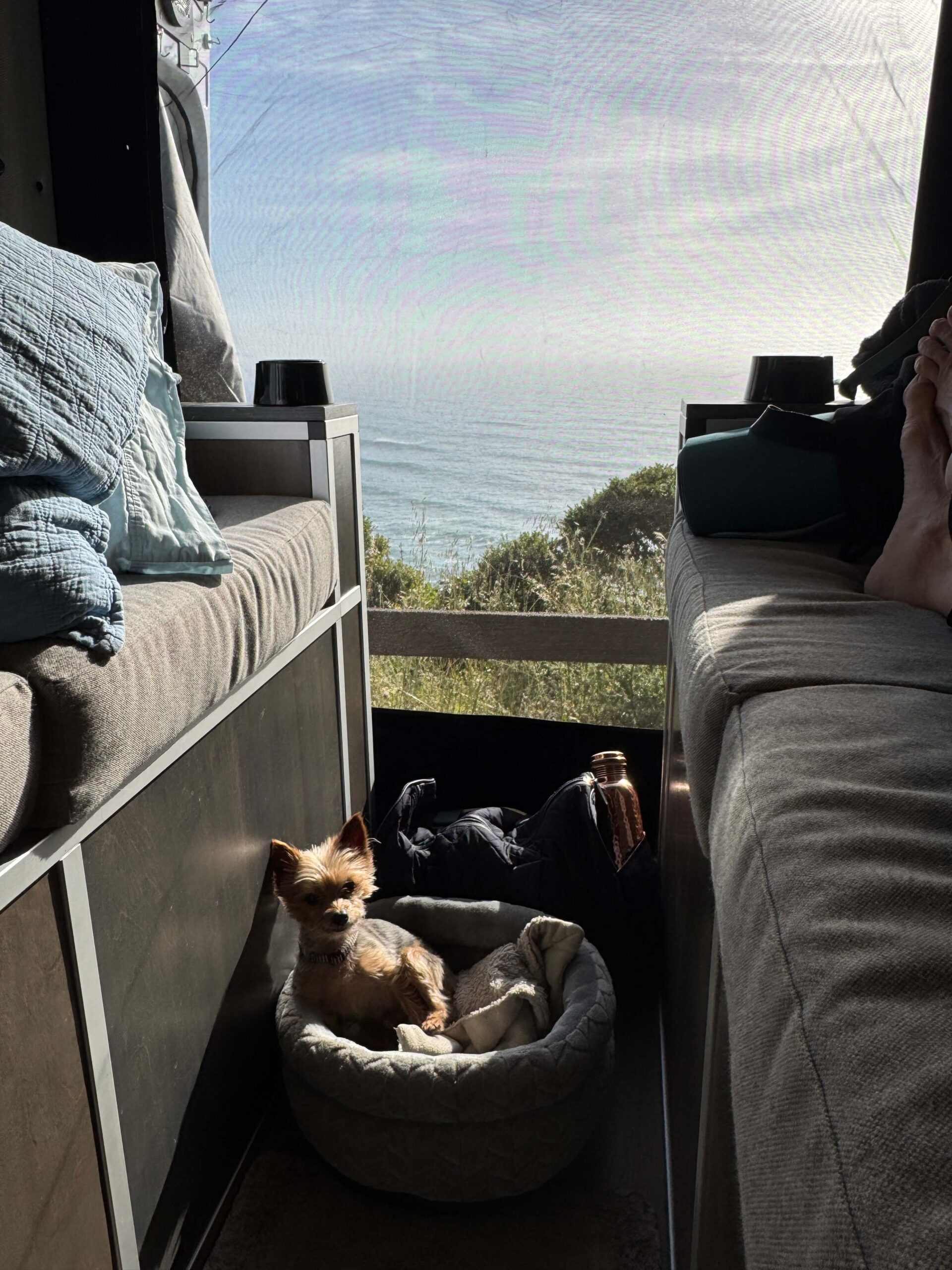
This is especially true for our sleeping and living areas. Our split bunks act as couches during the day. But at night when we’re sleeping, they allow one of us to get up to use the bathroom without disturbing the other.
Our front driver and passenger seats swivel around to act as “living room chairs” when camping. Our kitchen table doubles as a workstation.
For cooking, we have a pullout drawer with a built-in induction cooktop. Combined with our microwave that doubles as a convection oven, we can cook most any meal that we are used to at home.
A small electric pump moves fresh water directly to our kitchen faucet and our sink drains to a gray tank underneath the van.
Our fresh water system holds nearly 40 gallons, which is large enough to meet all of our water needs for 1 to 2 weeks at a time. We usually fill up for free anywhere we can find potable water — usually a gas station, park or rest area.
For showering, we have a hot/cold mixer connection at the rear of the van, allowing us to take an outdoor shower with the rear doors open. We have a shower curtain that attaches to the rear doors, giving us some level of privacy. But we rarely use it, except when boondocking for longer stretches of time. Most often, we shower every couple of days at a Planet Fitness gym or if a campground has a shower. A third option is a small bucket of hot water, soap and sponge before bed.
Electricity comes from our 12v lithium ion battery bank, which gets recharged via sunlight and/or while we’re driving via the Sprinter’s alternator. We can also plug into the electricity grid, via a 110v or 220v outlet at a home or RV park. But we’ve found our power system is robust enough that so far we’ve not needed the grid for recharging.
The internet comes via our Starlink Mini dish, which is mounted to our roof. It works whether the van is moving or stationary, although works best when it has a clear view of the sky.
Laundry is done every week or so at a public laundromat or if/when we stay with a friend or relative.
What is the biggest inconvenience of van travel?
Using the restroom — one of the least talked about but hardest parts of vanlife.
We have a small “dry” toilet made by Ogo that sits inside a heavy duty slideout drawer. It’s hidden until you need it. The Ogo diverts liquids into a small tank that is manually emptied when needed. For #2, it has a bag receptacle that you then properly dispose of at a time of your choosing.
Needless to say…we prefer flushing toilets whenever we’re near one.
How long can you comfortably remain off-grid?
For electricity, as long as we want, assuming we drive every few days or have sunny days.
Our water supply can last upwards of 2 weeks if we don’t need it for showering.
We need to empty trash every couple of days, but can put it in an exterior storage box if we’re staying out longer.
What part of living in the van has been easier than expected?
We adapted very quickly to the small living space.
Maybe in another life we could have been tiny home dwellers.
What part has been harder than expected?
The care of the two dogs has been more difficult.
Frequently being in a new place, the dogs “backyard” is always changing, so they can be a bit more tentative or want to explore and not just do their business. Oftentimes our stops lack grass, or are covered in thorns. At home, you have a porch or entryway to clean off the paws or dry off when it’s raining, but in the van we often have to do that inside.
But they adapted well to life on the road and it’s been worth the added hardships to have them with us instead of left in a kennel or with a sitter.
The smaller fridge had taken some getting used to so meal planning takes more mental bandwidth. Also, leftovers are harder to handle as you have less space.
The more we travel in it, the more we learn to alter our home habits for van habits and it’s gotten easier with each trip.
How do you handle extreme heat, cold, rain, or severe weather?
We’ve been mostly successful in chasing temps in the 70’s, but extreme weather has caught up with us a few times.
Our rooftop air conditioner helps keep us cool, but if the temps are 90 degrees or above, it struggles to cool the entire van.
During a stretch in early July in Montana, we opted to get a hotel room because of excessive heat warnings into the low 100’s.
We’ve only had a couple of nights near freezing, and our diesel heater easily handled keeping the van toasty.
Aside from a few days of rain here or there, we haven’t experienced severe storms or snow. We do keep a weather radio that would alert us to severe weather and flash flooding.
Have you ever felt unsafe, and how do you evaluate whether a place is safe for the night?
We have yet to feel unsafe, although some of that is because we are traveling with dogs and there are two of us.
We use the iOverlander app for finding many of our overnight stops, which is popular in the nomad and vanlife communities. Users will identify various free or paid places to park, leave reviews, photos, etc. That info helps greatly in making the decision for where to stay. We usually avoid places that have lots of traffic like rest stops or truck stops, but that’s mostly because we want peace and quiet.
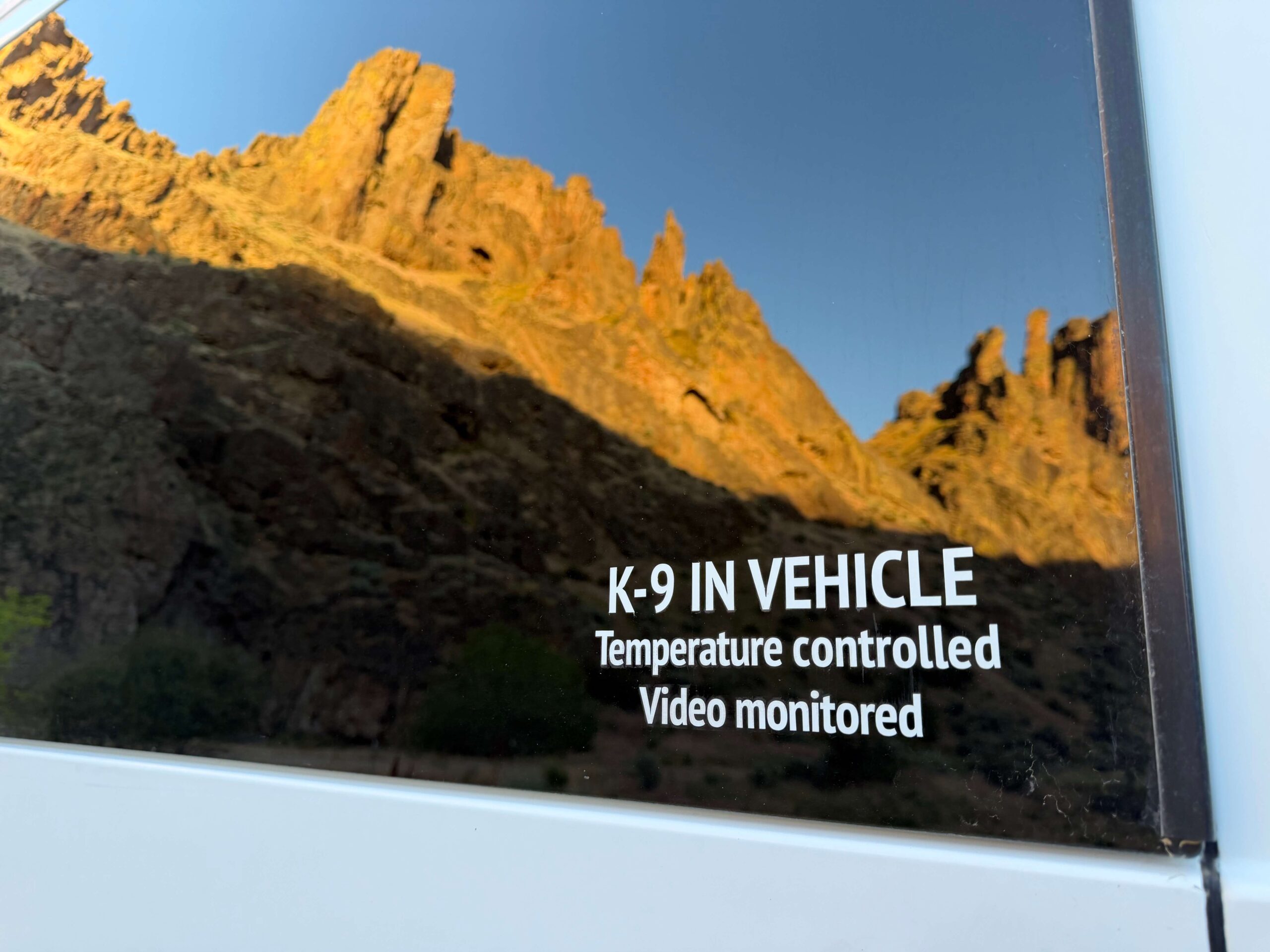
For security, we have external cameras that allow us to have a 360-degree view around the van. We also have window decals that state that dogs are in the vehicle.
Despite those precautions, we have had one “criminal” encounter. It happened during the summer trip in the middle of the day in a quiet coastal town. We were parked in a town square park and sitting about 100 feet away from the van at a picnic table. I saw a young man walking past our van when he stopped to try and open the side door (which was locked.) I immediately shouted at him and it quickly became clear that he was either drunk or high or both. The shouting attracted enough attention that he took off. It served as a reminder that we always lock our doors, whether we are inside or outside the van.
What Has and Hasn’t Worked
What have been the best parts of traveling this way?
We regularly go to sleep and wake up with million-dollar views.
Mountains, coastal cliffs, forests and streams — nature at its very best, and often we have it all to ourselves.
And if we don’t like a particular spot, we just move on down the road until we find one we do like.
What destinations or experiences have been your favorites?
In our first year of van travel we visited 23 national parks. Most of these visits have been over several days, allowing us to more deeply explore and experience their beauty.
But my personal favorite was camping outside Joshua Tree for a week alongside our daughter and her van — the same one we built with her four years ago.
What has been the most difficult or unpleasant experience?
Our German Shepherd died during our summer trip.
While he was getting up in years, it was still a shock. He fell ill overnight into Memorial Day, and died before we reached the ER vet the next day. He passed away peacefully with us by his side — our saddest moment by far.
We are left with our small Yorkie, who has been helping us heal. We view this as something that would have happened regardless of whether we were in the van or at home though…so are thankful that he was with us in his final hours.
Have you experienced breakdowns or problems with the van’s electrical, plumbing, heating, cooling, or other systems?
Aside from the previous story about the heating repair I did over the winter, mostly just minor issues like needing to tighten a screw or bolt.
I need to replace the cable to my rooftop Starlink, which failed during the last trip. But I carry a spare so was able to rig up a temporary solution.
What parts of the original design have not worked as expected?
We put a lot of time and thought into designing the van, and had the previous experience of seeing our daughter live inside her van for 1.5 years.
As a result, we are very happy with our design — everything has worked as expected. Most of the adjustments we’ve made were minor.
What have you changed or upgraded since beginning your travels?
We’ve made a decent amount of upgrades since launching the van in September, 2025.
New suspension, external storage boxes mounted on the rear door, upgraded car horns, building a small shoe cubby, adding some aftermarket storage pockets, adding a mirror and installing “critter” lights under the van to discourage any nighttime visitors.
Is there anything you left out that you now wish you had included?
Not left out, but I’d do a few things slightly differently.
I have external lights on each side of the van, but the switches for each light are in different locations. At the time it was easier to run less wire…but in hindsight putting them in a cluster would be best.
What parts of van travel are romanticized online but are less appealing in reality?
There is a significant amount of work (what we call friction) involved in van travel — losing the comforts of home, constantly monitoring gauges, figuring out where to park for the night, etc.
But that effort is exchanged for the freedoms we gain — the autonomy to see hidden gems and beautiful sights from the comforts of our “mobile” home. We think it’s totally worth it.
Their Relationship and Lifestyle
How has building and traveling in the van affected your relationship?
We’ve been doing DIY projects and traveling together for 20 years, so we had a lot of practice long before we ever got the van.
In general, partnering on stressful projects has taught us to be better listeners, to share frustrations before they fester, and to be kind and respectful in our honesty.
We both feel that the van build and ensuing travel was like earning a graduate degree in our relationship.
If your relationship isn’t strong before beginning vanlife…then you’re not ready for vanlife.
How do you handle disagreements about destinations, spending, driving, schedules, or daily routines?
It helps that we are aligned on the big issues — like how to spend money or what we do in our downtime.
Vanlife is often made up of a lot of daily chores. While we each have our own area of expertise, we make sure the chore list is equitable but also plays to each of our strengths.
My spouse does 80% of the food prep, while I do most of the dishes and cleaning. I enjoy being the driver more than the passenger.
If one of us needs a chore break, we ask the other to step in.
What have you learned about yourselves through this experience?
We need a bit of friction in life.
Difficult things can be fun and good for us — whether it be travel, exercise or learning something new.
We’ve learned that we’re more capable than we first thought, which pushes us to take on more new things and experiences.
Has the lifestyle changed how you think about possessions, comfort, travel, or retirement?
Yes! When you limit your space and therefore your belongings, you also reduce what you have to worry about.
Having less stuff and more time (thanks to retirement) results in more bandwidth to focus on each other and our own evolution.
The Future
How long do you expect to continue traveling this way? What might eventually cause you to stop?
I’m not sure I see a time when we don’t travel like this.
If our health is good and we’re enjoying it, we’ll keep doing it. Our distance and cadence may change as our parents age or when/if grandchildren become part of our lives.
How many trips or weeks of travel per year would be ideal?
We’re still in the discovery mode, but our sweet spot so far is anywhere from 3 weeks to 3 months.
We like the idea of escaping our local climate in the hottest and coldest months of the year — these would be our longer trips.
In the Spring and Fall, when the weather is near ideal at home, we’d still travel but for shorter trips of 2 to 3 weeks.
What do you expect to do with the van when this chapter of your lives ends?
I suspect this van is just the first of several that will be part of our future in vanlife.
The one drawback of our DIY build is that it began with a van that was already five years old.
At some point, we will want to do another build on a new or slightly used Sprinter, for the same reasons that people often trade in an older car for a newer model. Regardless of when that happens, we will sell this van to someone who hopefully enjoys it as much as we have.
Financial Independence and Retirement
How important was reaching financial independence in making this lifestyle possible?
It was vital.
Financial Independence (FI) gave us the time freedom to work on the van nearly full time for months.
It also gave us the ability to spend more freely on the conversion without having to make tough financial choices.
Did you have any difficulty giving yourselves permission to spend this much money after years of saving and investing?
Initially, somewhat. I found myself in the early stages of the build debating over $100 decisions. But we’d been re-training our brains to focus on what we valued, and spending more freely in those areas.
Oddly enough, the more we invested in the van build, the more comfortable we got with spending even more money on it.
The $9k suspension is the best example — as it was an easier “Yes” decision to make at the end of the build because we’d realized the full value it would give us.
How did you decide that the cost was worth the experiences you expected to receive?
This was where we benefited from doing the build ourselves.
If I worried that we might not enjoy the experience of traveling by van, I was still confident we could sell it to someone who would and recoup most of our money.
In other words, we had little to lose by taking a chance on building the van.
Do you view the van as an asset, an expense, or simply the price of purchasing a lifestyle you value?
It’s always depreciating, especially the more we use it, so I don’t count it toward our net worth.
It is an expense, but a relatively small one for the use we get out of it.
So I probably see it as the price of pursuing this lifestyle.
How do you balance saving for an uncertain future with enjoying your money, time, freedom, and health today?
In the early days of our journey to financial independence, we often asked ourselves “what would the 55 or 65-year-old version of us think about this decision?”
As a result, we came to learn a lot about what we valued…like our independence, health, pursuing new adventures and spending time with people we love and respect.
Once we aligned our spending/saving with those values, the rest of the decisions were much easier.
What has this experience taught you about designing a retirement rather than simply retiring from work?
It taught me that I am at my best when I’m intentional about my actions.
Retirement can remove a lot of the distractions from one’s life, leaving more time for self reflection and improvement.
My 30-year career is just one chapter in my life. I hope to write many more chapters — learning more about myself along the way.
Final Advice
What should someone do before buying a van and beginning a conversion?
We had a head start in this area, as we’d watched our daughter live out her vanlife dreams.
The most important step is to determine if small RV travel is right for you. Borrow or rent a converted van and take it for a weeklong trip. You’ll realize pretty quickly what your friction level is for this kind of travel.
Consider attending a vanlife expo — they can usually be found in every region of the country, and are a great way to see various professional and DIY conversions up close.
There are few “original” ideas when it comes to van designs — find what you like and make it your own.
If you can’t do any of the above, then watch a LOT of Youtube channels — builders, travelers, content creators, etc.
What are the biggest mistakes prospective van owners should avoid?
Look at most used van marketplaces and you’ll see plenty of examples of people thinking they’d love vanlife, but their expensive RV has only been used once or twice. They fell in love with a perceived lifestyle without truly researching the pros and cons.
And that mistake can be an expensive one, even for a DIY builder.
What should a couple discuss before committing to this type of project and travel?
They should honestly examine how they work together on projects and how they feel about spending most of every day in close proximity to one another.
What are their privacy expectations? How much inconvenience are each of them willing to endure for the comforts of home (showers, flushing toilets, a room all to themselves, etc.)?
Be honest with concerns, listen to your gut instincts and listen/talk to others who have gone before you.
Knowing everything you know now, would you do it again?
100%!

Thank you for providing the information and opportunity to engage in this changing, sometimes chaotic process of life, partners and other ways of making life and lifestyle changes. As far as I can see you and your spouse have found what appears to be basically normal for you. Again I thank you both for your devotion to maintain your life goals and I hope you are doing well. Thanks for giving this opportunity to learn about vanlife.
Happy to help! Glad you enjoyed the series.
I would be interested in a comparison of expenses between your daughter and yourself. The reason I ask is that my wife and I are full time so it is not necessary to drive back and forth to home base. This is a considerable savings but not clear to me just how much. If we have a need to go home we park the van at the airport and fly home. Do you find that the video cameras are worth the expense and battery drain? Do you only turn them on when you want to use them? Thanks for the help and great information. Best travels!
Thanks for the questions. My daughter spent a lot less in her full time travels, saving more with free campsites and not quite as much “fun” spending as us. The Blink cameras have been fine – a full year in and only one of the five cameras needed new batteries. We leave the sync module on whenever we have the Starlink on, as it needs internet to connect. We’ve never “armed” the cameras to trigger motion detection. We can only view one camera at a time, but otherwise it does what we need it to do.
Thank you for the reply. Happy travels!