
 Here’s our latest interview with a millionaire as we seek to learn from those who have grown their wealth to high heights.
If you’d like to be considered for an interview, drop me a note and we can chat about specifics.
This interview took place in April.
My questions are in bold italics and their responses follow in black.
Let’s get started…
OVERVIEW
How old are you (and spouse if applicable, plus how long you’ve been married)?
I am 43, my spouse is 45, and we have been married for 20 years.
Do you have kids/family (if so, how old are they)?
We have three daughters, ages 18, 16, and 14.
What area of the country do you live in (and urban or rural)?
We live in a small coastal town in the south. We have intentionally chosen to stay in a more rural, family-oriented environment rather than pursuing opportunities in larger cities.
That decision has shaped nearly every part of our financial journey.
What is your current net worth?
As of early 2026, our net worth is approximately $1.2 million.
We first crossed the $1 million mark in April 2024.
What are the main assets that make up your net worth (stocks, real estate, business, home, retirement accounts, etc.) and any debt that offsets part of these?
Our net worth is made up of the following:
- Retirement accounts: ~$600,000
- Farm assets: ~$380,000
- College savings: ~$66,000
- Banking and cash savings: ~$65,000
- Vehicles: ~$44,000
- Miscellaneous assets: ~$15,000
EARN
What is your job?
I work in data analytics and data science management for a fortune 100 company.
What is your annual income?
Base is $145K.
There is a bonus structure that ranges but up to $58K. It averages more towards the low 30s.
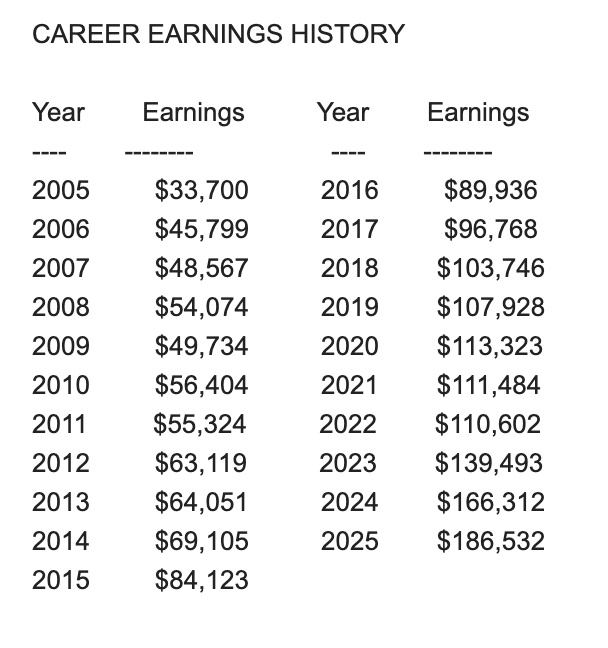
Tell us about your income performance over time. What was the starting salary of your first job, how did it grow from there (and what you did to make it grow), and where are you now?
I started my career in 2004 as a consultant intern while still in college. One of the clients I worked with offered me a full-time role after graduation.
My starting salary was $32,000, and my title was “Marketing Manager,” although in reality I did whatever was needed.
That first job was challenging. The business had multiple moving parts, and I was quickly pulled into situations I wasn’t prepared for.
I was eventually moved into their accounting firm, which aligned much better with my finance background, but the environment became difficult. At one point, I was asked to go door-to-door selling tax services for $250 while competing against large providers offering similar services for a fraction of the price.
I brought in zero clients, and the workplace became increasingly hostile.
I started looking for something new and eventually landed a role in operations with a large insurance company at a salary of $33,700. I don’t believe I was their first choice, but once I got in, I found my footing.
I focused heavily on efficiency and performance. My metrics quickly stood out, to the point that I was investigated because my output didn’t seem believable.
That became my niche. I was often asked to take on new roles or test new processes, even when those roles didn’t formally exist yet.
Looking back, I made a consistent mistake. I assumed that doing good work would naturally lead to higher pay.
While that is partially true, it happens much slower than being intentional about career progression.
In 2007, we had our first child and made the decision for my wife to stay home. That cut our household income significantly and forced us to become very disciplined financially.
Around that time, I decided to pursue an MBA through a night program. From 2008 to 2010, my schedule consisted of working during the day, attending classes at night, and traveling on weekends for in-person sessions.
It was exhausting, but we viewed it as a short-term sacrifice for long-term opportunity.
In 2009, we reached a major decision point. The original plan was to move to a larger city and pursue a career in banking.
However, my wife shared that she did not want that lifestyle. She valued the time we had together and the slower pace of life, even if it meant less income. We chose to stay.
That decision came with trade-offs. After graduating with my MBA in 2010, I reached out to recruiters and explored opportunities, but nearly all required relocation.
Staying in a small town significantly limited career options, and I remained in my current role.
There were times I felt stuck. I had flexibility and stability, but limited growth. During performance reviews I excelled, I was really good at my job, but I was bored.
I was able to be very involved in my kids’ lives—taking them to school, attending field trips—but financially, progress felt slow. We often compared ourselves to others who appeared to be moving ahead more quickly, an absolute financial pitfall.
In 2015, a leadership opportunity opened up for the first time in many years, and I was selected. That helped improve our financial situation and gave me new challenges.
I began building reporting tools that expanded beyond my local team and eventually supported multiple states.
Over time, I found myself in a familiar position. Strong performance, increased responsibility, but limited upward mobility.
In 2019, an opportunity came through a connection I had helped earlier in his career. He encouraged me to apply for a remote analytics role.
Initially, I faced resistance from HR and recruiting because my background was in operations, not technical analytics.
I eventually interviewed but was not selected. However, the hiring manager offered something far more valuable—mentorship.
Over the next year, I worked nights and weekends learning SQL and building technical skills. None of this work was part of my job; it was all done independently to prepare for a future opportunity.
A year later, another role opened, and I was offered the position. It required taking a step down in both pay and title, and there was no guarantee of success. Many people advised against it.
Ultimately, I trusted my instincts and made the move.
It turned out to be the most important decision of my career. Since then, I have received multiple promotions, moved into leadership roles, and increased my income beyond what was possible in my previous path.
Since moving to a support role in 2020 I have seen a 65% increase in my salary to where it is today.
What tips do you have for others who want to grow their career-related income?
Be willing to take a step back if it positions you for long-term growth. The most important move I made looked like a downgrade at the time.
Also, do not assume that doing good work alone will maximize your income. It matters, but it can move slower than being intentional about your career path. A
s a hiring manager I have seen people negotiate salary really well. They have taught me you can do this respectfully and come out ahead over the years.
What’s your work-life balance look like?
Work-life balance has been a major driver in our decisions. Staying in a smaller town and remaining in certain roles allowed me to be very present in my kids’ lives — taking them to school, attending field trips, and being involved day to day.
That trade-off came at the expense of faster income growth, but it was intentional and something I would choose again.
Today I work from home and have great work-life balance. I work 4x10s which turns into a few hours on Friday. I work hard to keep my hours around 45-50.
I never work weekends unless I want to. I feel very blessed with my current balance.
SAVE
What is your annual spending?
Our annual spending is roughly $150,000 last year.
What are the main categories (expenses) this spending breaks into?
This interview has shown me that my books are a mess, they have way too much detail. I use Quicken and when I run spending by year I have 309 categories.
My new goal for 2026 is to consolidate that to core expenses and simplify that part of my life.
Our largest categories are:
- Core household expenses is about $2,000 a month.
- Automotive was about $16K last year. We had some repairs and auto insurance is a lot with 2 teenage drivers.
- Education and activities for our children
- Giving and tithing was about $16K last year.
- Our farm and horse program. This is by far our biggest category right now last year costing around $100K. Some of that will turn into assets later.
The farm is a significant category and reflects a lifestyle choice rather than a financial optimization decision.
Do you have a budget? If so, how do you implement it?
We do not follow a formal budget today, but that is largely because of habits we built earlier.
In the early years, especially when we were a single-income household, we relied on a very strict cash envelope system. Each spending category had its own envelope, and once the money was gone, that category was done for the month.
While that approach was strict, it was also freeing. We always knew exactly how much we could spend, and it removed the stress and guilt around spending because the decisions had already been made ahead of time.
We used that system for about ten years. Over time, as our income grew and our habits became more ingrained, we gradually moved away from a strict budgeting process.
Today, we rely more on those established habits and general awareness of our spending. Our natural tendency toward frugality, combined with consistent saving, has allowed us to maintain a surplus without needing to actively manage a detailed monthly budget.
What percentage of your gross income do you save and how has that changed over time?
We have consistently saved around 12% of our income into retirement accounts, including employer match. That percentage has remained fairly steady over time.
We also save a large portion of our monthly income but it has fluctuated greatly over the last few years. COVID really hurt the horse business so we have not had steady horse sales meaning expenses come out of our monthly.
Also, over the last few years we have been building up the horse business. An example would be 2024, we saved an additional $48K.
We have since used that to purchase additional horses. Our build phase is complete and I expect the savings to go back up.
We are also entering the phase of college with our oldest attending now. I am sure these expenses will be cutting into savings as the three work their way through.
What’s your best tip for saving (accumulating) money?
Start as early as possible. Time is your biggest advantage, and you can’t get it back later.
Learn contentment. Be happy with your circumstances and what you have.
Automate it in the beginning. You have to save first and then spend. Quit looking at your salary as your spending ability, have cushion.
What’s your best tip for spending less money?
Be mindful of what you consume, especially early on. I see this all the time with my friends and myself.
We decide we want something, so we start doing some research. The more time you spend researching or watching content about something, the more you begin to want it.
This can make the purchase more emotional than it needs to be. Creating distance before making a purchase helps reset perspective.
Next time you want a big purchase, stop googling it for a few weeks and see what happens to your desire. Mentally try and understand the desire and research is the fun part. Rarely will the purchase continue the euphoria.
Stop using debt to fund joyful purchases. You do not need that vacation to rest and reset your life.
The purchase on debt will not give you what you are seeking.
Here is some tough love for the men reading: Quit being little boys buying toys for yourself. Grow up and take care of your family and the older you.
If you can’t pay cash, you do not need it. If you can pay cash, you may still not need it.
What is your favorite thing to spend money on/your secret splurge?
One of my favorite things to spend money on is a good massage. I still feel some guilt when I book one because I think about what else that money could be used for, but I always come away thinking it was worth it.
It’s been a reminder that it’s okay to enjoy the benefits of the work along the way.
The first 10 years of tight budgets and the desire to be different later makes me terrible at spending money on myself. I am working on this with thoughtful purchases that add benefit to me and bring me joy.
I still have a very long way to go on this and I love that the financial world has realized this and more people are talking about it.
For accountability I will give you a failure. 2025 I had a goal to get a massage a month, a wild idea of crazy spending on myself.
In January, I changed my goal to quarterly. I got 3 massages last year.
INVEST
What is your investment philosophy/plan?
My investment philosophy is intentionally simple. I invest primarily in low-cost index funds with a long-term mindset.
My allocation is roughly 90% stocks and 10% bonds, and I review the portfolio about once per year.
I do not try to time the market or make short-term investment decisions. Instead, I focus on consistent contributions and letting time and compounding do the work.
Earlier in our journey, we also maintained a taxable investment account that followed the same philosophy. We contributed monthly into low-cost index funds and allowed it to grow steadily.
Over time that account reached about $60,000, which we later used to fund horse purchases instead of taking on debt.
What has been your best investment?
From a financial standpoint, my best investment decision was starting my 401(k) early and consistently contributing to it.
From a personal perspective, the best investment we’ve made has been our farm lifestyle. It has brought significant joy to our family and allowed us to create experiences for others in our community.
I cannot count the lives impacted by the farm and we constantly have people here to find joy and refill their tank.
What has been your worst investment?
My worst investment decision came from trying to time the market. In 2015, I moved my 401(k) investments out of stocks and into a money market fund based on fear of a downturn.
The downturn never came, and I missed out on significant growth. That experience reinforced the importance of sticking to a long-term plan and I have never tried it again.
How often do you monitor/review your portfolio?
About once per year.
NET WORTH
How did you accumulate your net worth?
We accumulated our net worth through consistent saving, early investing, and avoiding debt.
From the beginning, I contributed to my 401(k) and treated that money as untouchable. We paid cash for major purchases, including vehicles and home repairs, and maintained an emergency fund.
You think a lot about your car purchases when you write that full amount check vs. monthly amounts.
Our progress was slow and steady, especially as a single-income household. Raises often provided breathing room rather than dramatically increasing savings.
Another important part of our story is our farm. My wife grew up on a farm and always wanted to return to that lifestyle.
We were eventually given the opportunity to live in a farmhouse with access to land, and we built a small horse program over time.
While the farm has not been a consistent source of income, the asset appreciation has helped offset many of the costs over time. More importantly, it has created a life we enjoy and a place where we can bring others together.
What would you say is your greatest strength in the ESI wealth-building model (Earn, Save or Invest) and why would you say it’s tops?
Consistency in saving and long-term thinking. I was never the highest earner or the most aggressive investor, but I was consistent over a long period of time.
That consistency, combined with starting early, made the biggest difference.
What road bumps did you face along the way to becoming a millionaire and how did you handle them?
Career limitations due to geography, slower income growth early on, and the challenge of comparing ourselves to others who appeared to be progressing faster.
I no longer compare our situation to others but I do sometimes ask myself how the other people in the school pickup line can afford the cars they drive.
How old were you when you made your first million and have you had any significant behavior shifts since then?
We crossed $1 million in April 2024. The moment was surprisingly uneventful.
Nothing changed in our day-to-day life, and it reinforced that the habits mattered more than the milestone itself. At first this was a little bit of a letdown but quickly realizing it was never about the money.
What personal habits and/or traits have you developed that have made you successful at growing your net worth?
Delayed gratification, contentment, and being intentional about spending and consumption. I was not born with this, it was a built skill.
When I turned 18 and found credit cards, I went crazy. Why buy one new CD when you can buy everyone that artist put out.
Credit was the best thing ever invited and gave me so much “Freedom”. When we got married we decided that would stop and we would become debt-free.
I started reading as much as I could, reading a ton of books. Then over time blogs became popular and I started following others.
My financial education is a combination of all the voices in the space. I have been a reader of ESI money for years and always found these interviews inspirational.
What advice do you have for ESI Money readers on how to become wealthy?
Start as early as possible, keep it simple, and stay consistent. Avoid overanalyzing and ignore market noise.
Early on don’t think about where to get the best return, build the habits. Your savings rate is more important than your returns.
Build that muscle first. Find a like-minded community, even if it is online. Hearing others will help you develop your own skills and plan, then one day you will be answering this interview as well.
FUTURE
What are your plans for the future regarding lifestyle?
I enjoy my work today, but I value having more flexibility in the future, especially as our family grows. The next block of life is get the kids through college.
From there I think grandkids will drive a lot of our decisions. We will stay in our tiny 100-year-old farmhouse, but will also travel more as the kids move out. We really enjoy a quick weekend trip to explore new areas.
What are your retirement plans?
I would not consider retiring before age 55. When I do, I would likely shift my focus toward nonprofit work and community involvement.
Being over a decade away feels like so much time, but I know it will be here so quick. Today I am shifting to non-retirement accounts to help bridge the gap between retirement and retirement age.
Are there any issues in retirement that concern you? If so, how are you planning to address them?
We recognize that life can change significantly over time, so we try to keep our plans flexible. I think healthcare in 10 years will be a major driver.
I think I share the concern with most, do I have enough? I want to have enough to buy the guacamole, and what is that number?
MISCELLANEOUS
How did you learn about finances and at what age did it “click”?
It clicked after I got married and financial decisions were no longer just about me. Most of my practical knowledge came from books, podcasts, and online resources available to anyone.
Growing up finances were not discussed and most everything was purchased on debt. I may have more saved than my dad at this point.
Once I knew I had to change I went all in, listening and reading to as much as I could find. The world is full of great advice but it is also full of bad advice.
I think if you gather enough sources you can begin to understand the good vs. the bad.
Do you have any favorite money books you like/recommend? If so, can you share with us your top three and why you like them?
- The Total Money Makeover
- Rich Dad Poor Dad
- The Millionaire Next Door
Do you give to charity? Why or why not? If you do, what percent of time/money do you give?
Yes, giving is a consistent priority for us and an important part of how we approach money. We have a family fund that we all have access to, to give as we feel directed.
This is one of my favorite ways to spend money and I believe it is becoming the same way for my kids. They love to give out of the family fund but I think it would be harder if it was money they had earned… they’re getting there.
They do a really nice job of giving thoughtfully out of our giving fund.
Do you plan to leave an inheritance for your heirs (how do you plan to distribute your wealth at your death)? What are your reasons behind this plan?
If we leave an inheritance, we would want it to be a “leg up,” not a full solution.
Our goal is to support our children, not replace the need for them to build their own lives.
Final Thought…
Looking back, it was never really about reaching a specific number. It was about the journey.
The process was long, slow, and often felt boring, but the habits built along the way created a life that I truly enjoy.
I’m not chasing things or trying to keep up with others. I’ve found contentment in what we have.
Building wealth is not exciting day to day. It’s more like watching paint dry — slow, steady, and sometimes messy along the way. But over time, the results are worth it.

Leave a Reply